When water counts, and when it is therapeutic
Under the Hot Springs Act, water from the ground is onsen if it is 25°C or warmer at the source or carries enough of any one of a list of substances. The Ministry of the Environment's analysis guidelines set a stricter bar, the ryoyosen or therapeutic spring: 25°C, or 1,000 mg/kg of dissolved minerals, or a set amount of carbon dioxide, iron, hydrogen ions, iodide, sulphur or radon. Only a ryoyosen is given a spring type. Takefue calls its own source one; our guide to private onsen deals with baths that are not onsen at all.
The spring types
The Ministry recognises ten types, named by their main ions, so 'sodium-calcium chloride' is a chloride spring in which sodium leads. Each below with what the Ministry's guide for bath operators or the Japan Spa Association says of it.
- Simple spring (tanjun onsen): under 1,000 mg/kg of minerals; gentle on the skin. Alkaline ones, pH 8.5 and over, feel smooth
- Chloride (enkabutsu-sen): salt left on the skin forms a film that holds in heat and moisture
- Hydrogen carbonate (tansan-suisoen-sen): lifts old keratin and sebum and leaves the skin smooth
- Sulphate (ryusan'en-sen): posted for cuts, poor circulation and dry skin, among others
- Carbon dioxide (nisanka-tanso-sen): bubbles cling to the skin; the gas widens the capillaries and warms the body
- Iron (gantetsu-sen): turns a cloudy reddish brown in the air and smells of rust
- Acidic (sansei-sen): strongly antibacterial; sensitive skin should rinse in plain water afterwards
- Iodine (gan'yoso-sen): brown like tincture of iodine, with a medicinal smell
- Sulphur (io-sen): the smell of eggs is hydrogen sulphide
- Radioactive (hoshano-sen): radon, with nothing to see or smell; the Ministry lists gout and rheumatoid arthritis among its indications
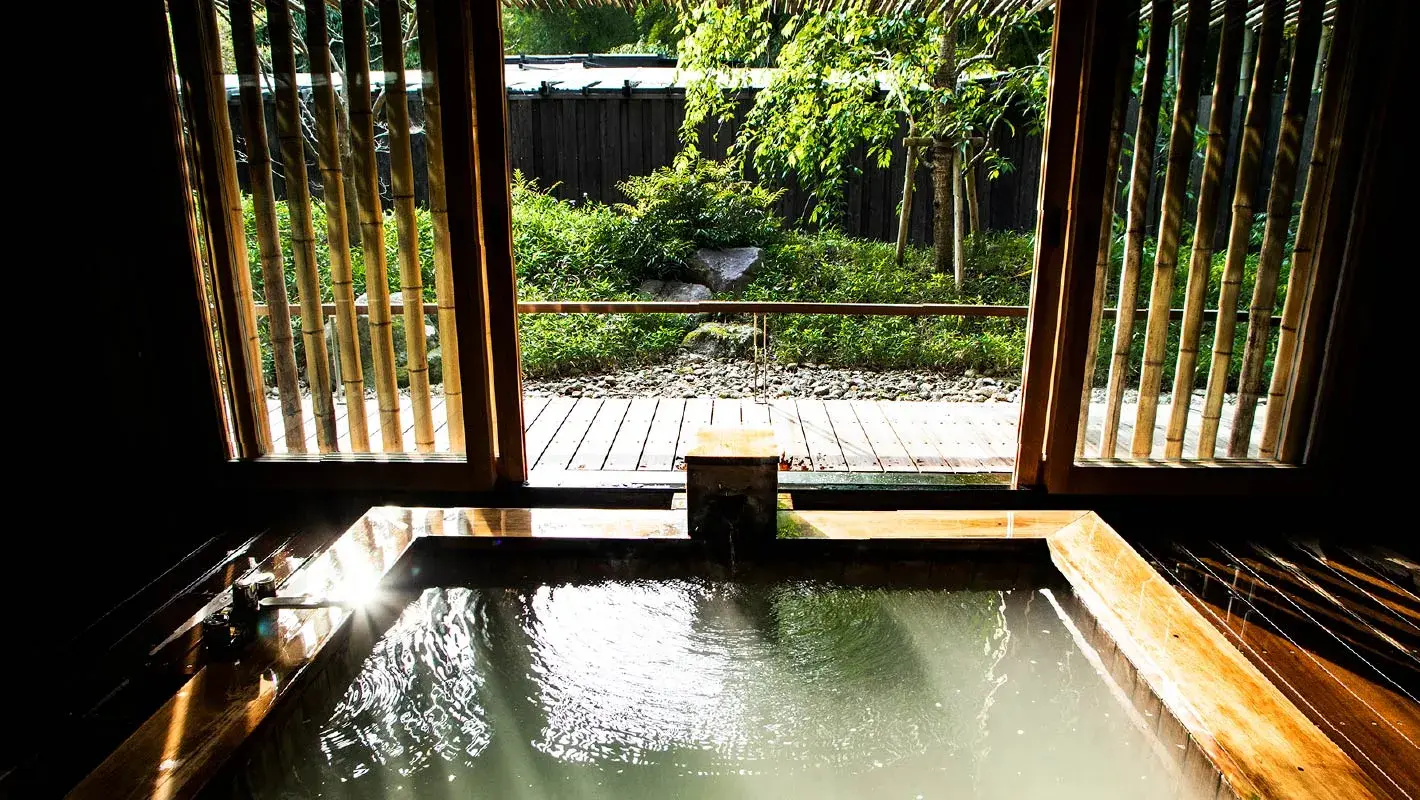
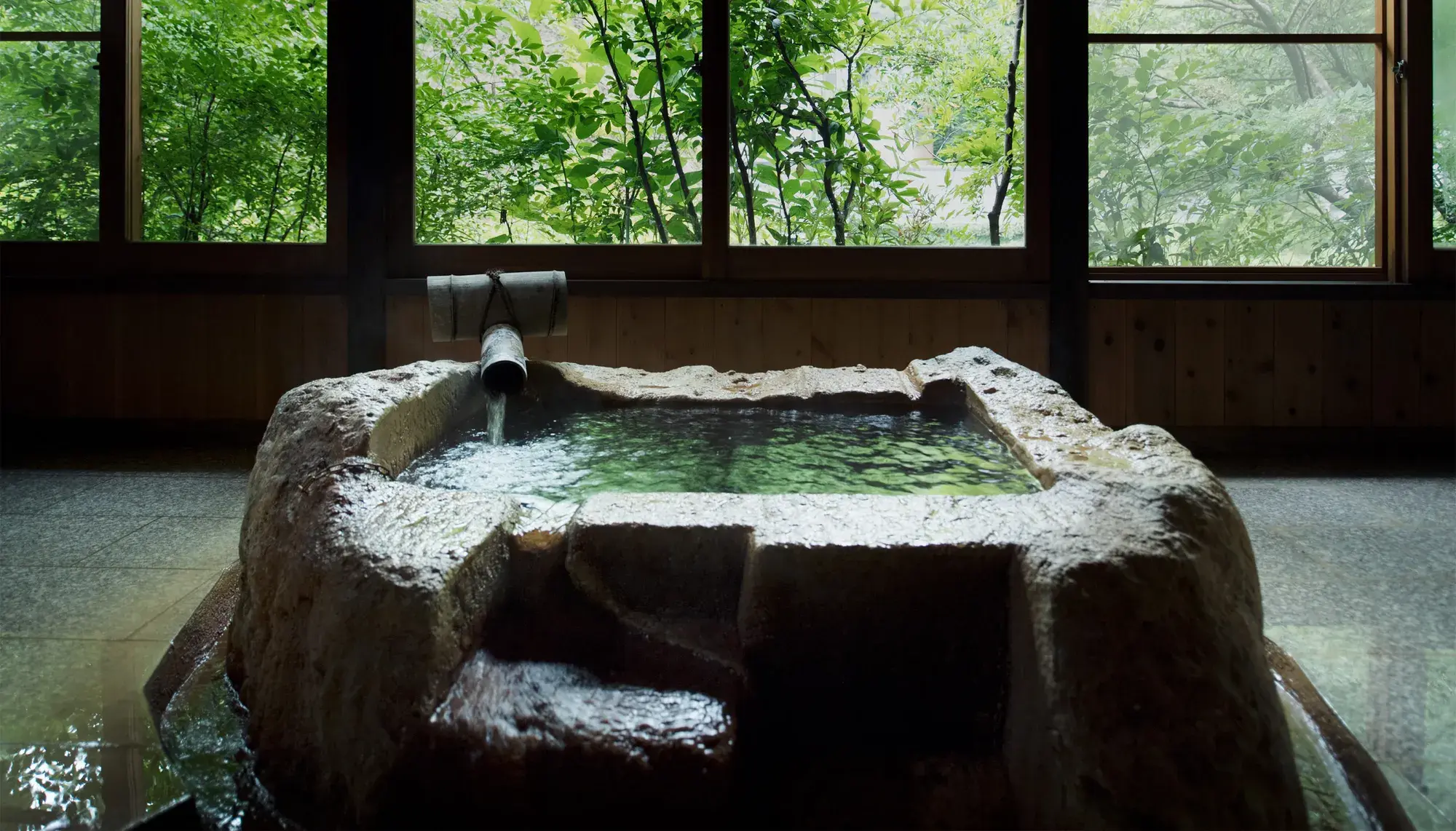
The three terms in brackets
After the type, the analysis sheet (onsen bunsekisho) classes the water by temperature at the source, pH and tonicity, the concentration against that of the body's cells. Akan Tsuruga Bessou Hinanoza's reads 'simple spring (neutral, hypotonic, high-temperature)'. The sheet also gives the date of analysis, which must be renewed at least every ten years.
- Temperature: cold mineral spring (reikosen) under 25°C; low-temperature 25–34°C; onsen 34–42°C; high-temperature 42°C and over
- pH: acidic under 3; weakly acidic 3–6; neutral 6–7.5; weakly alkaline 7.5–8.5; alkaline 8.5 and over
- Tonicity: hypotonic under 8 g/kg; isotonic 8–10 g/kg; hypertonic 10 g/kg and over
Free-flowing, and the lines that say otherwise
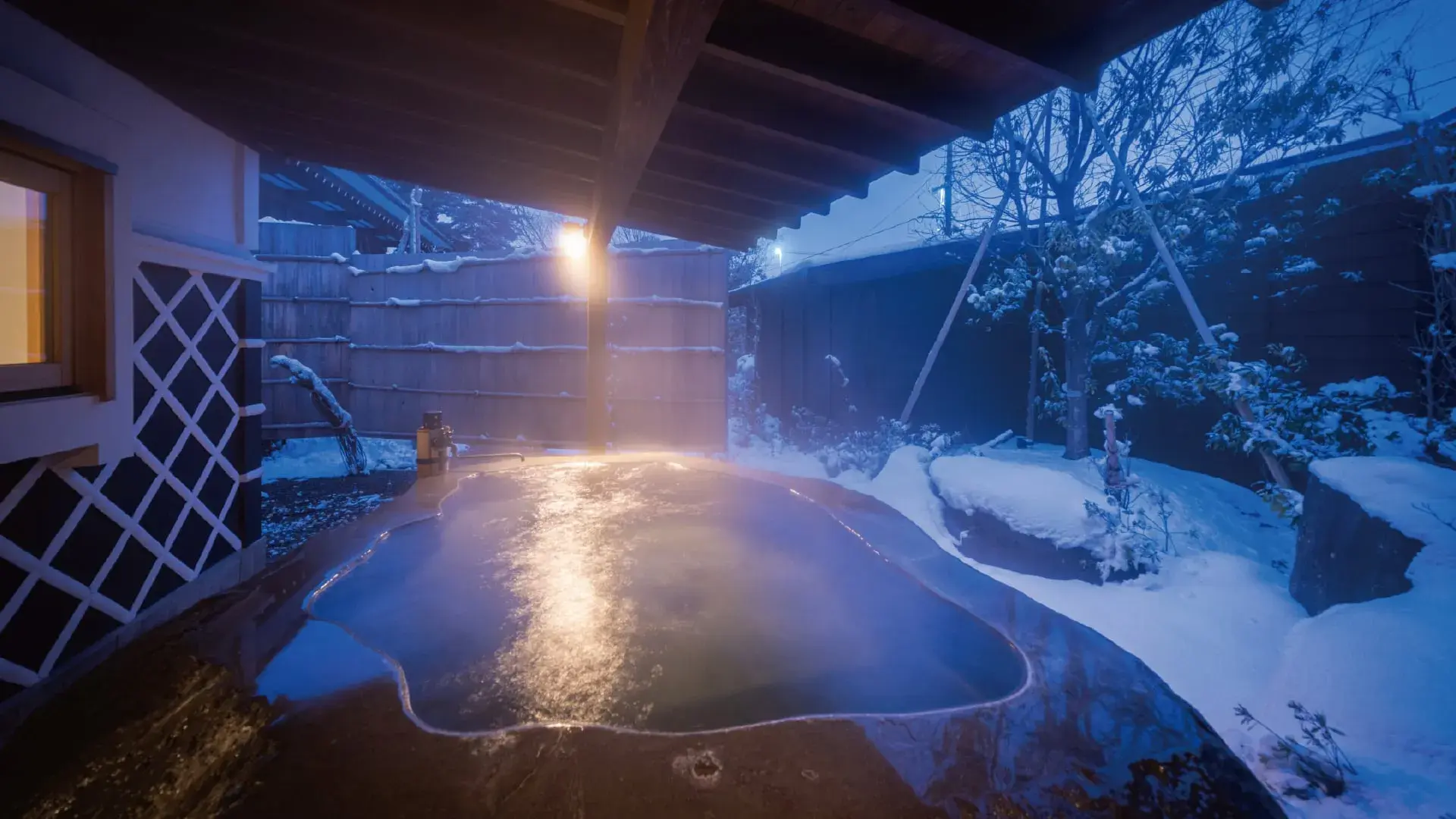
Kakenagashi means the water runs through the bath and away rather than round again; gensen kakenagashi, straight from the source. The phrase is the inn's own, but the law obliges every public bath to post whether water is added (kasui), heated (kaon), recirculated and filtered (junkan roka), disinfected or given additives, and why.
Good water needs little help. At Yamagata The Takinami bath attendants (yumori) set the valve so the 58°C spring sits at about 43°C in the room baths with no water added; Iki Retreat Kairi Murakami cools its 69.2°C source by the flow alone; most of Takefue's tubs have a red valve for more spring and a light-blue one for its own cold spring water. Shoraiso adds well water to a 93.6°C source and is still free-flowing.
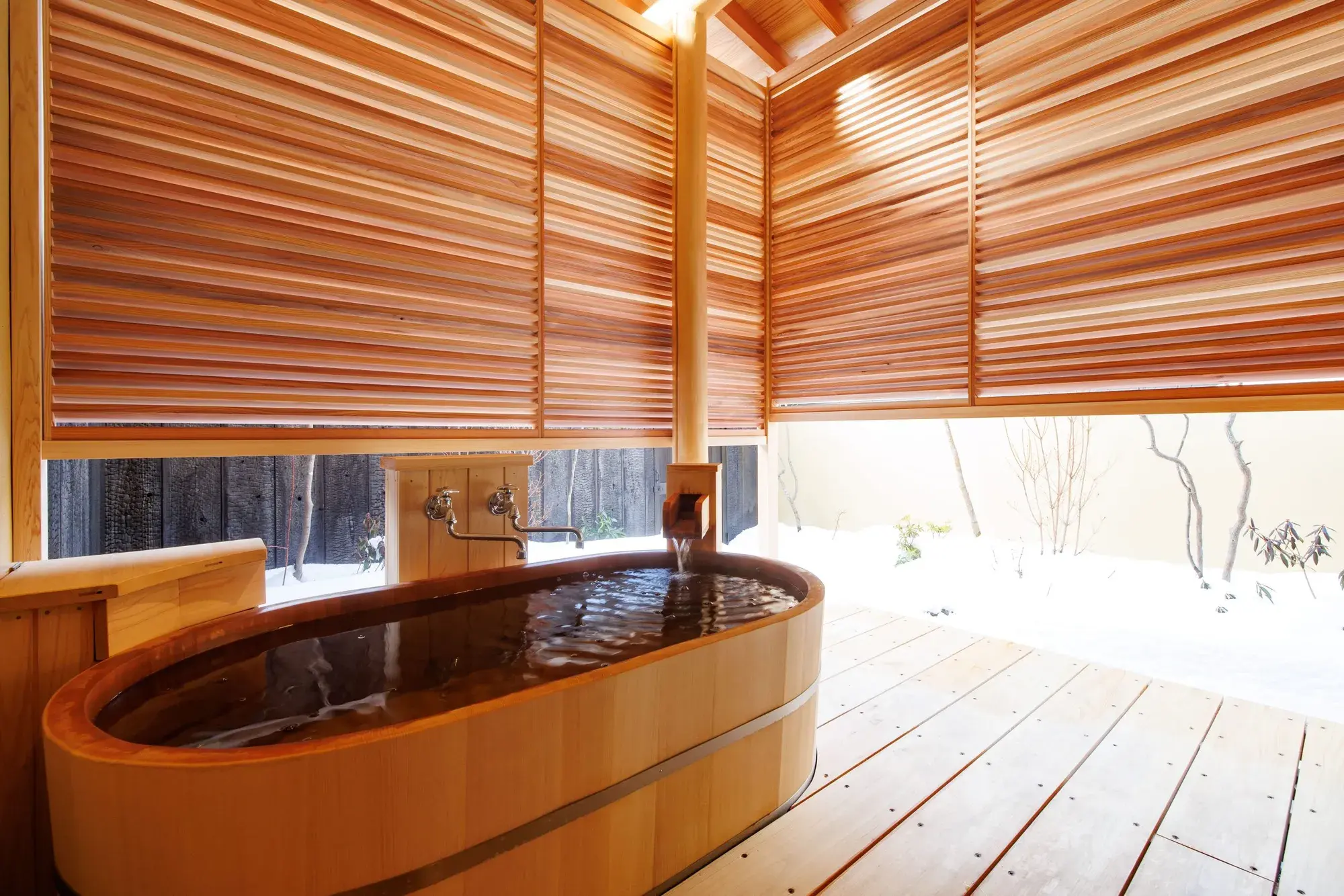
Recirculation is often necessary and not a fault. Satoyama Jujo's 27°C spring is heated and recirculated with fresh water fed in continuously; Lake Shikotsu Tsuruga Bessou Ao no Za says its suite baths are recirculated, filtered and chlorinated; Nishimuraya Honkan's shared baths are heated and diluted.
Reading an inn's bath description
Look for the source and whether it is the inn's own, the type, the handling words, and which baths they apply to. At Hinanoza the indoor large baths are free-flowing and the room baths recirculated; at Moku no Sho the public baths are recirculated while the private bath and some room baths run straight from the source. Fufu Hakone uses milky, sulphurous Owakudani water in its shared baths and clear Gora water in the rooms.
None of the inns on our list records an iron spring. The rest, by the type each record gives:
On our list
Simple spring15
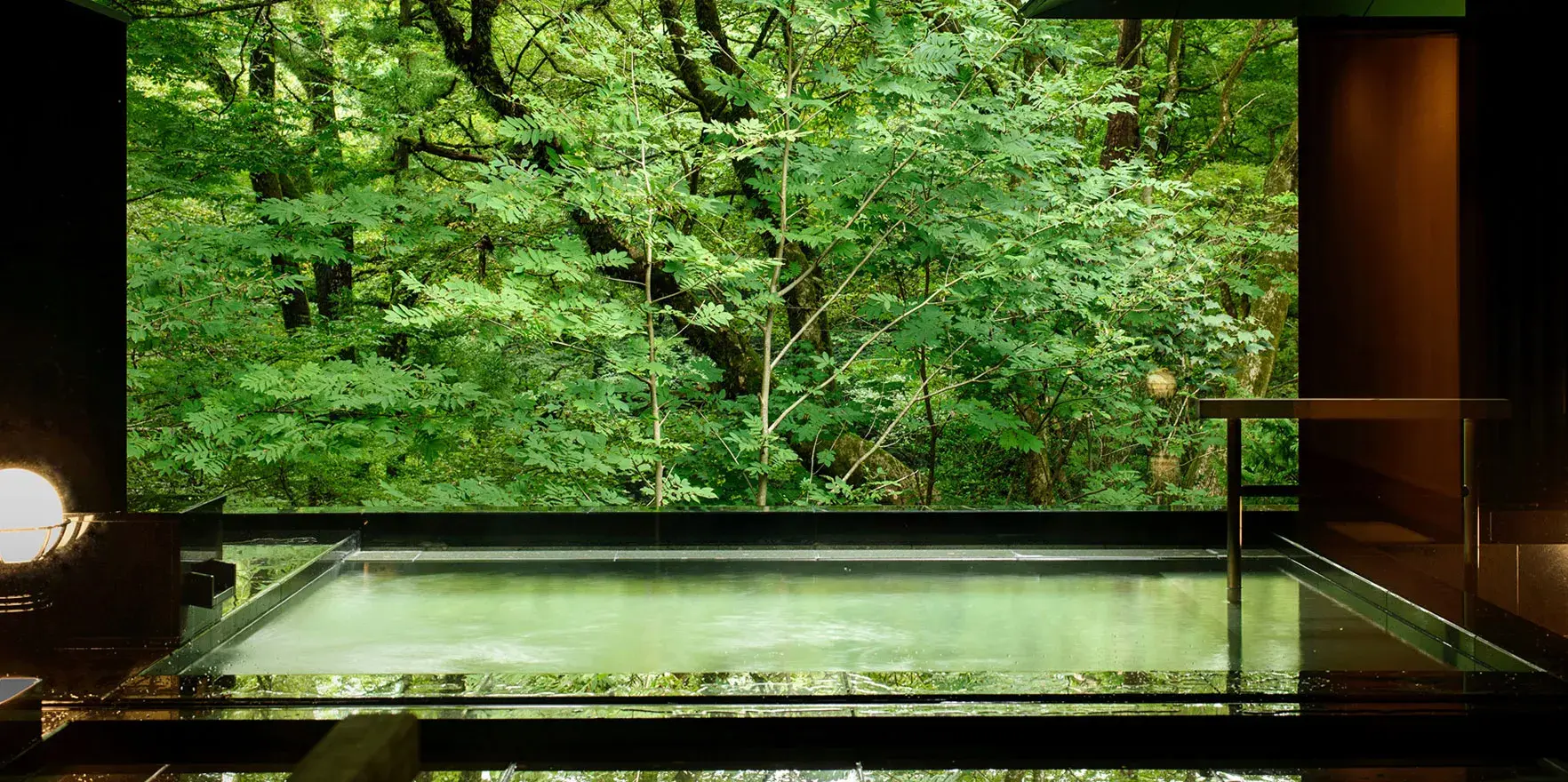
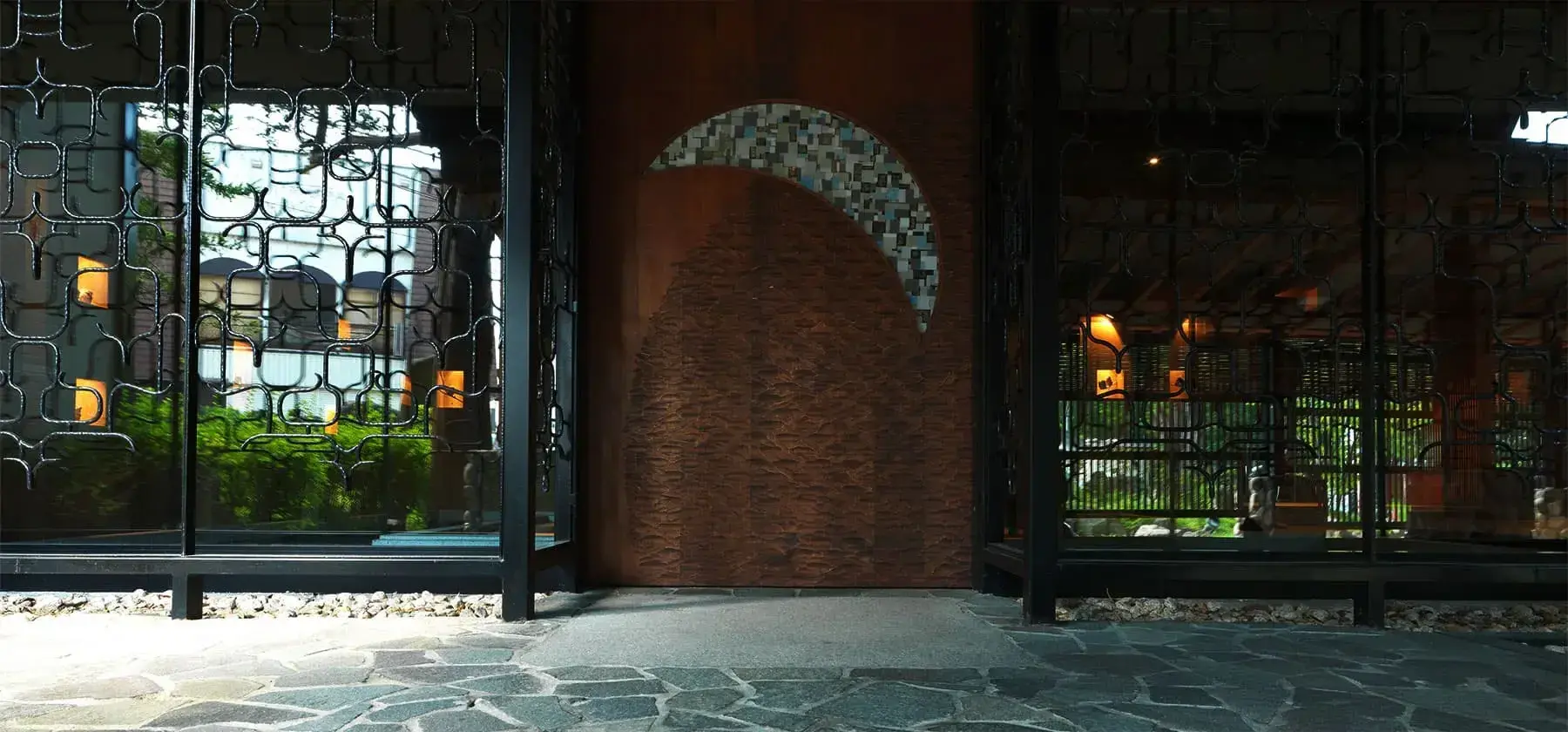 Akan Tsuruga Bessou HinanozaAkanko Onsen, Lake Akan
neutral, hypotonic and high-temperature; free-flowing in the indoor large baths, recirculated in the rooms
The other 10
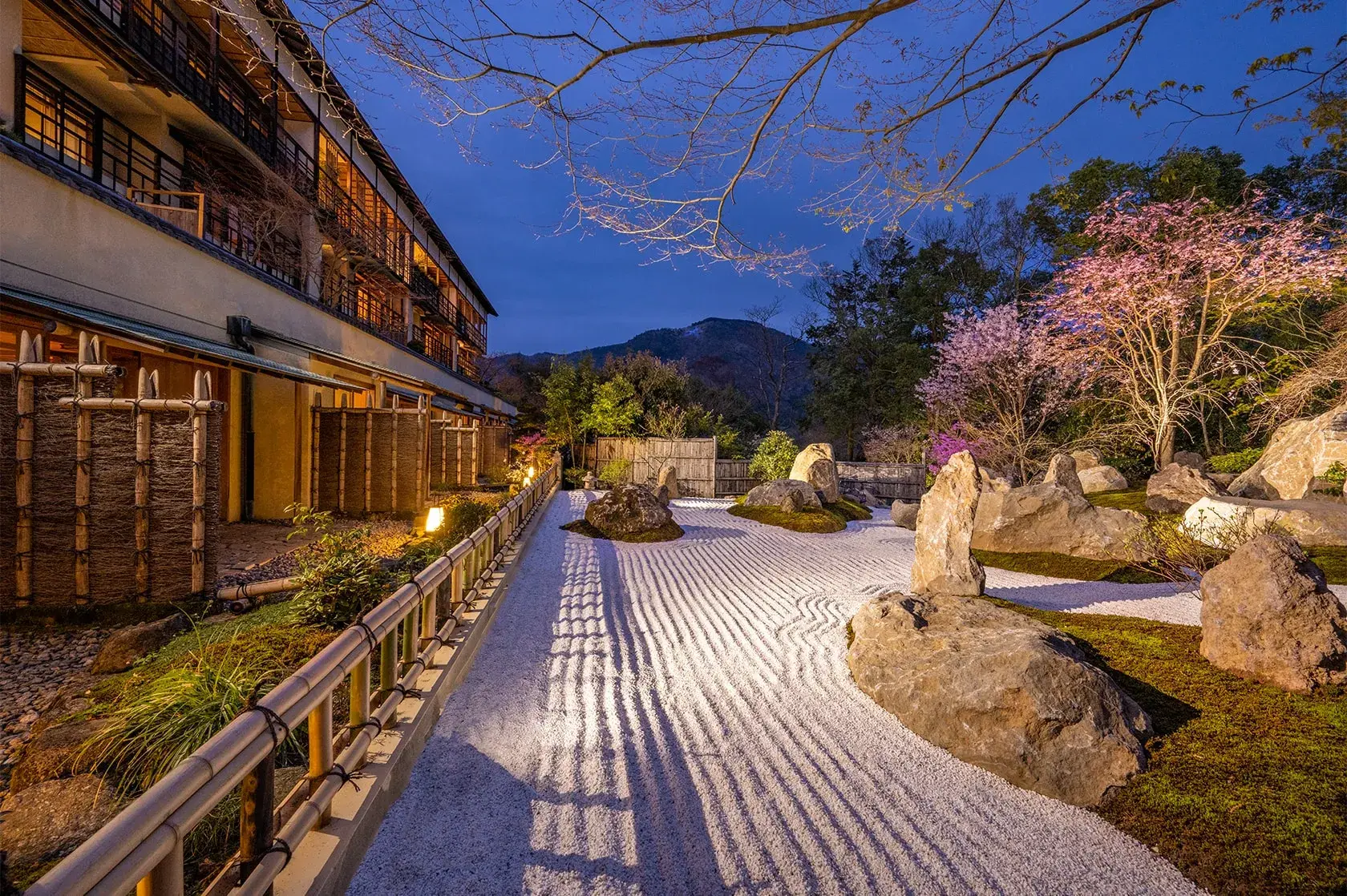
 The KayoteiYamanaka Onsen, Kaga
weakly alkaline, 48.3°C, free-flowing; the indoor and room baths heated
Chloride15
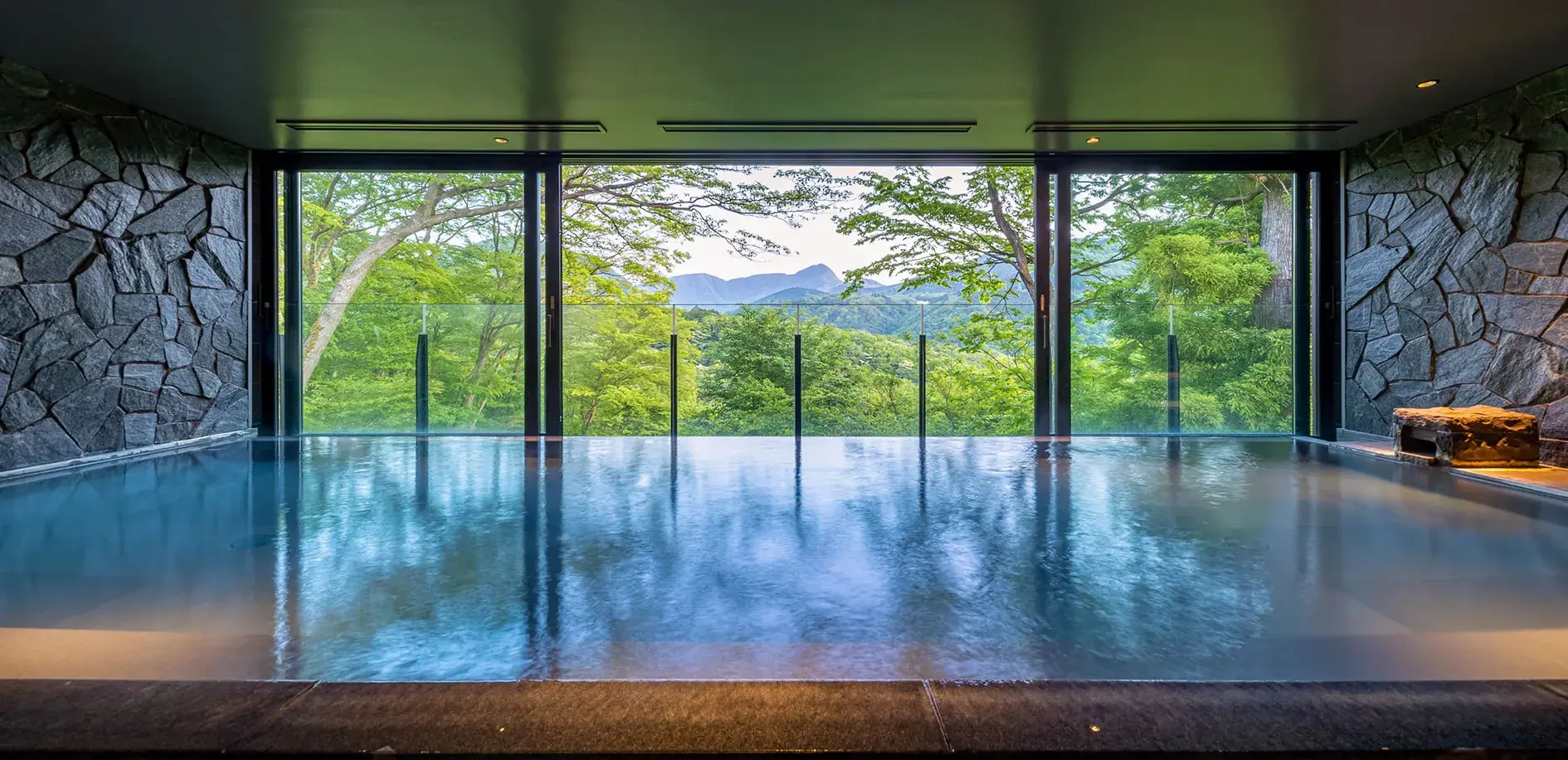 Fufu HakoneGora, Hakone
clear Gora sodium chloride in the rooms; acidic Owakudani water in the shared baths
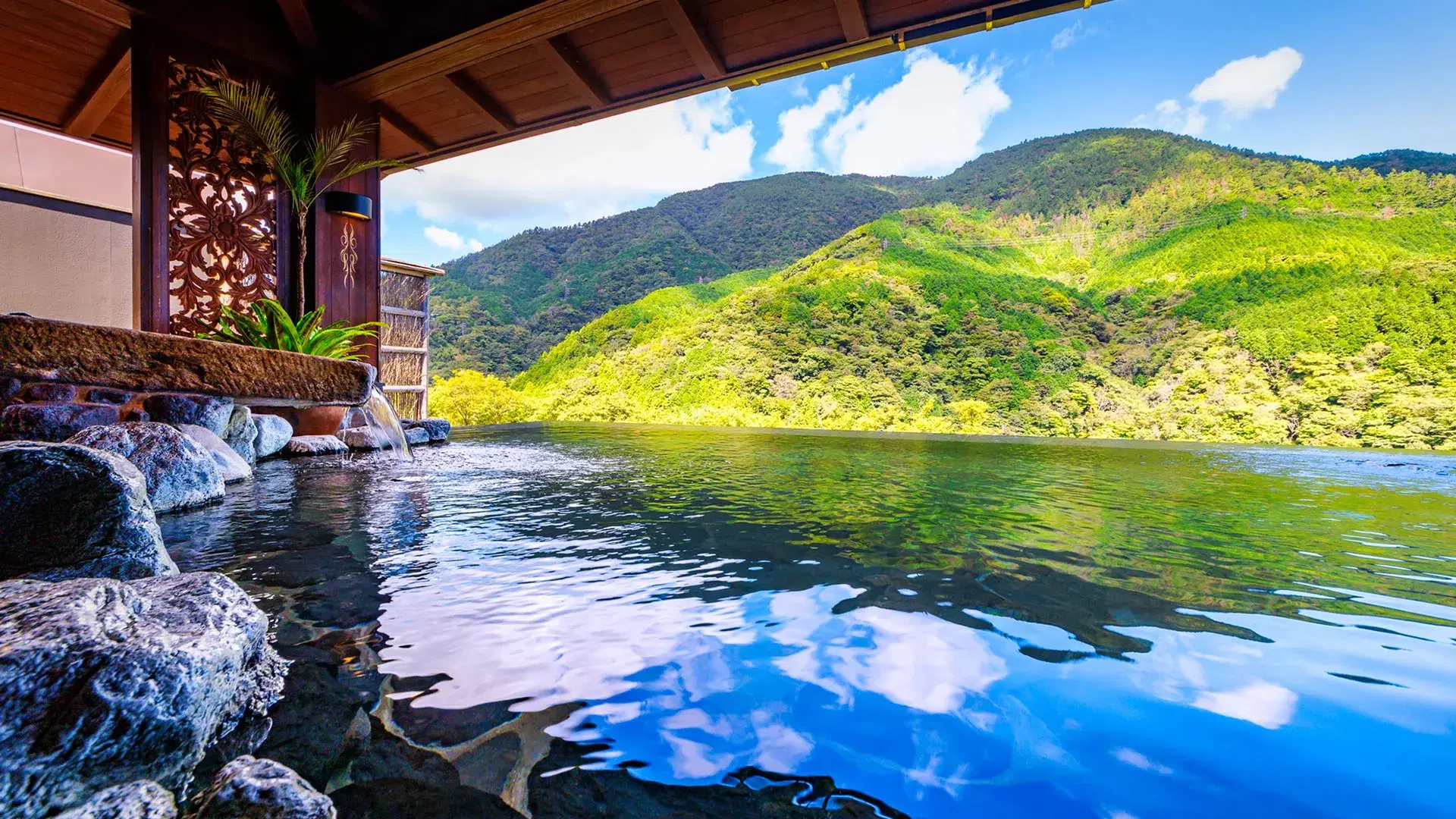
 Iki Retreat Kairi Murakami by Onko ChishinYunomoto Onsen, Iki
hypertonic, 69.2°C, free-flowing with no water added
The other 10
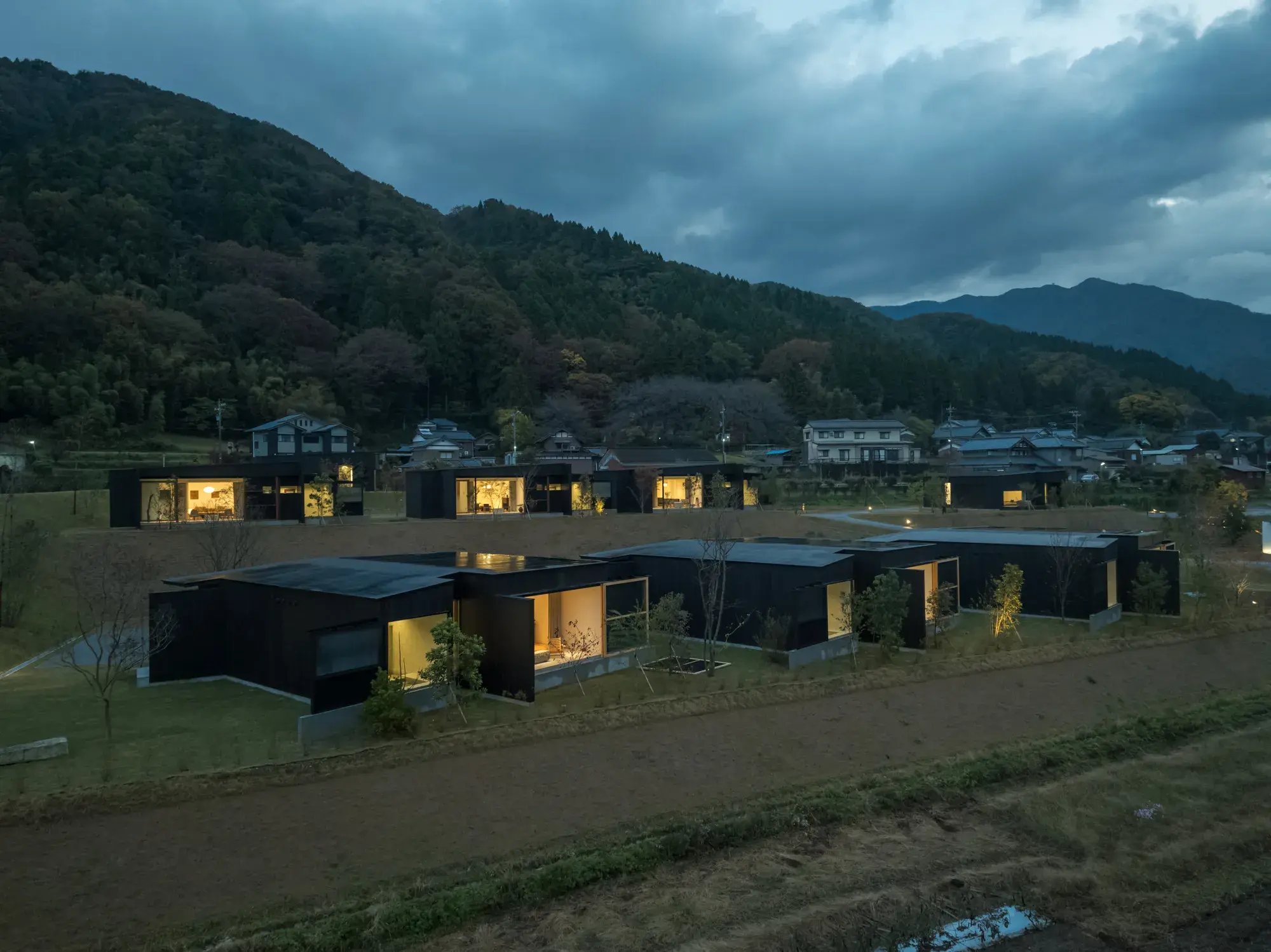 Kanshukuen EshikotoShimojohoji, Eiheiji
sodium chloride-hydrogen carbonate cold mineral spring, pH 9.1, heated
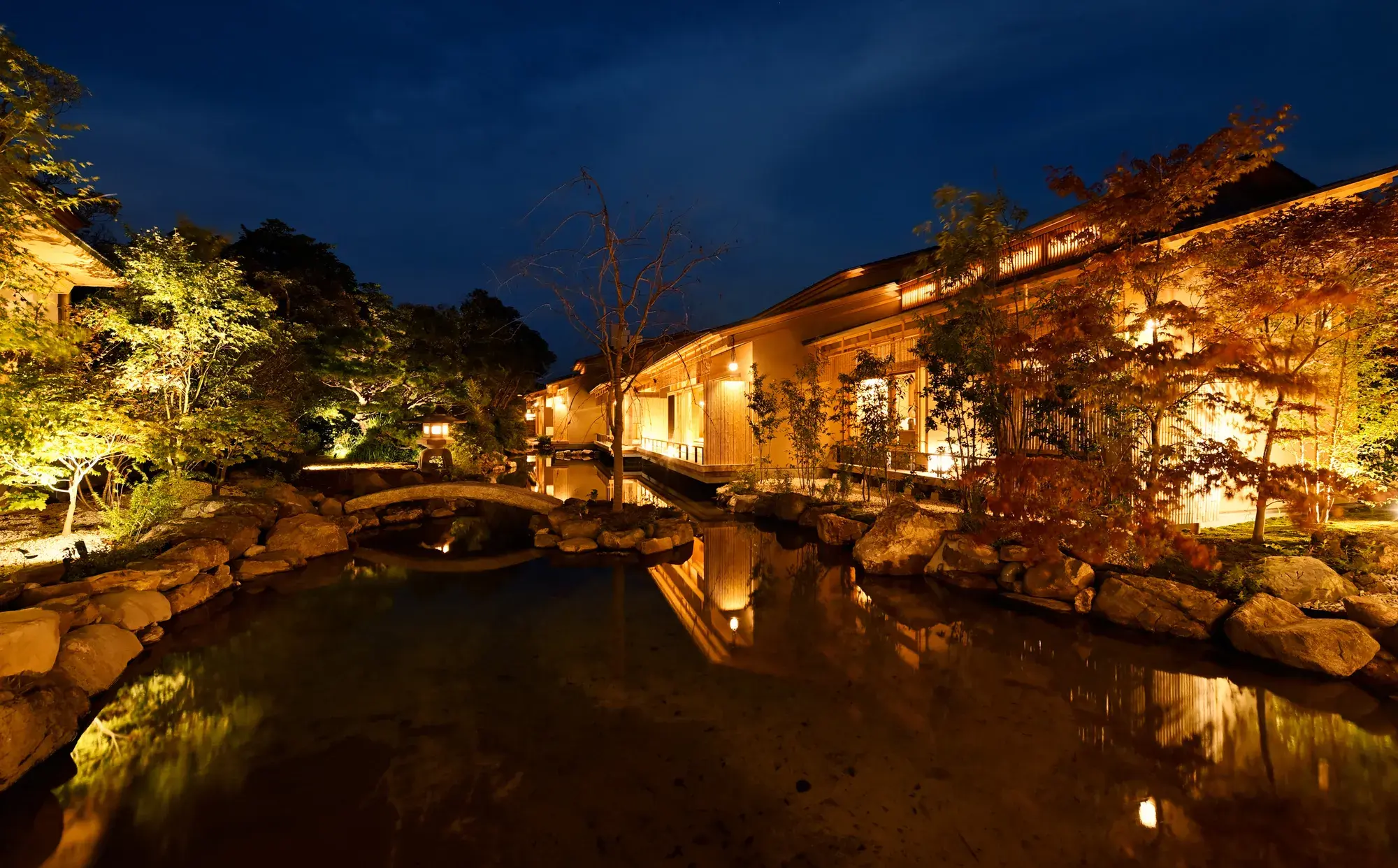 Kofuyuden BeniyaAwara Onsen
sodium-calcium chloride, about 70°C, free-flowing from four wells in the garden
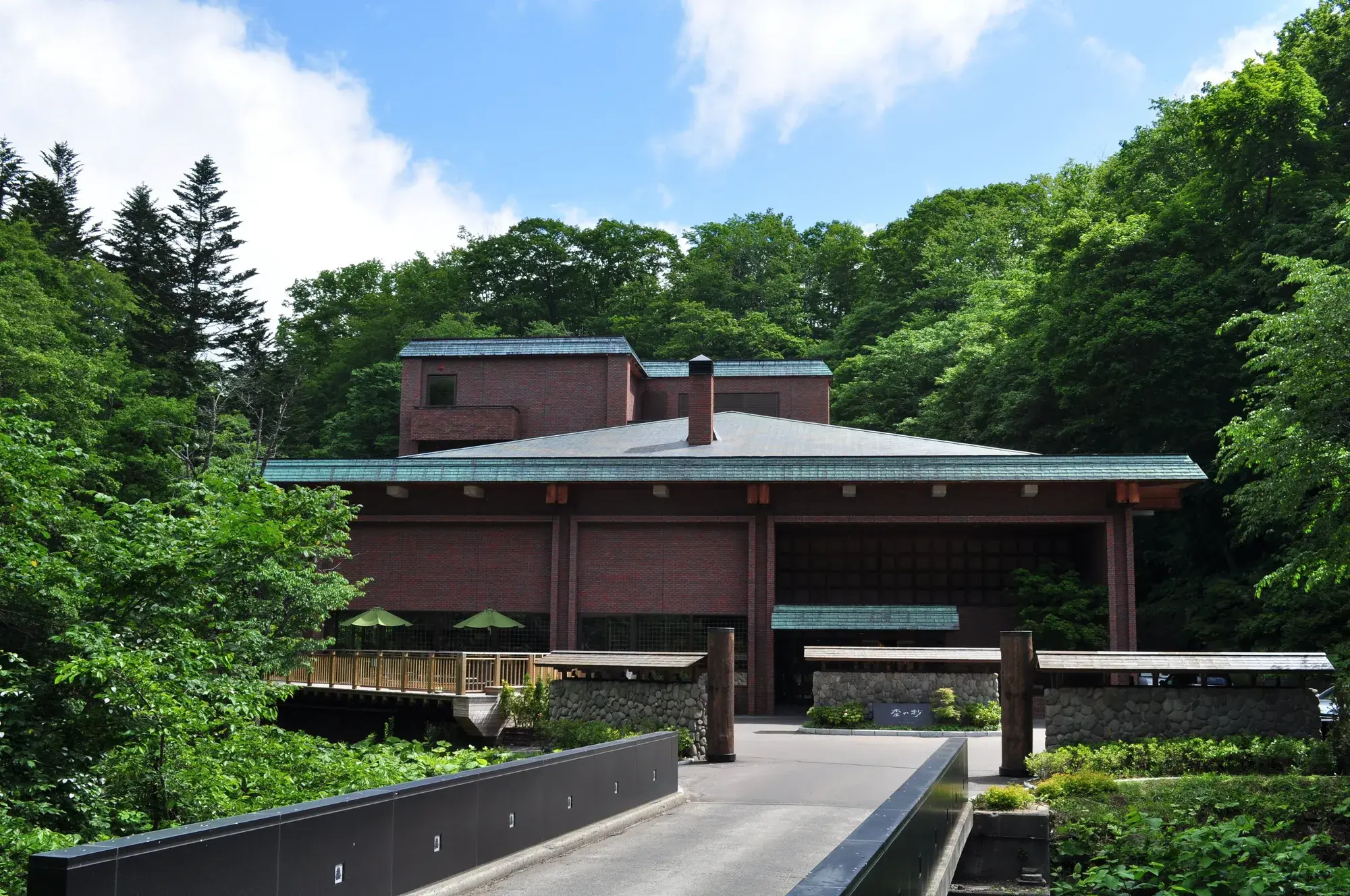 Niseko Konbu Onsen Tsuruga Besso Moku no ShoKonbu Onsen, Niseko
sodium chloride-bicarbonate; straight from the source in the private bath and some rooms
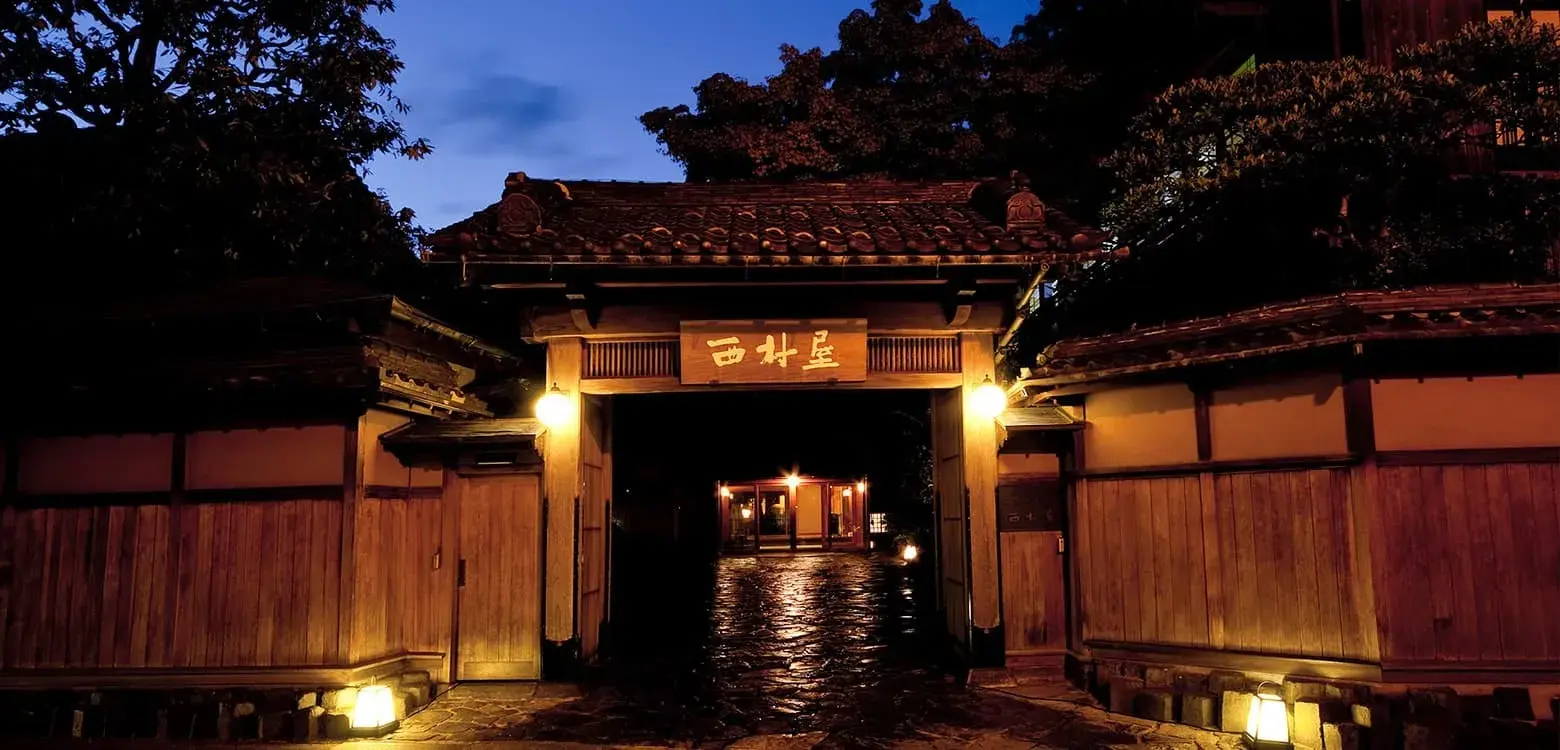
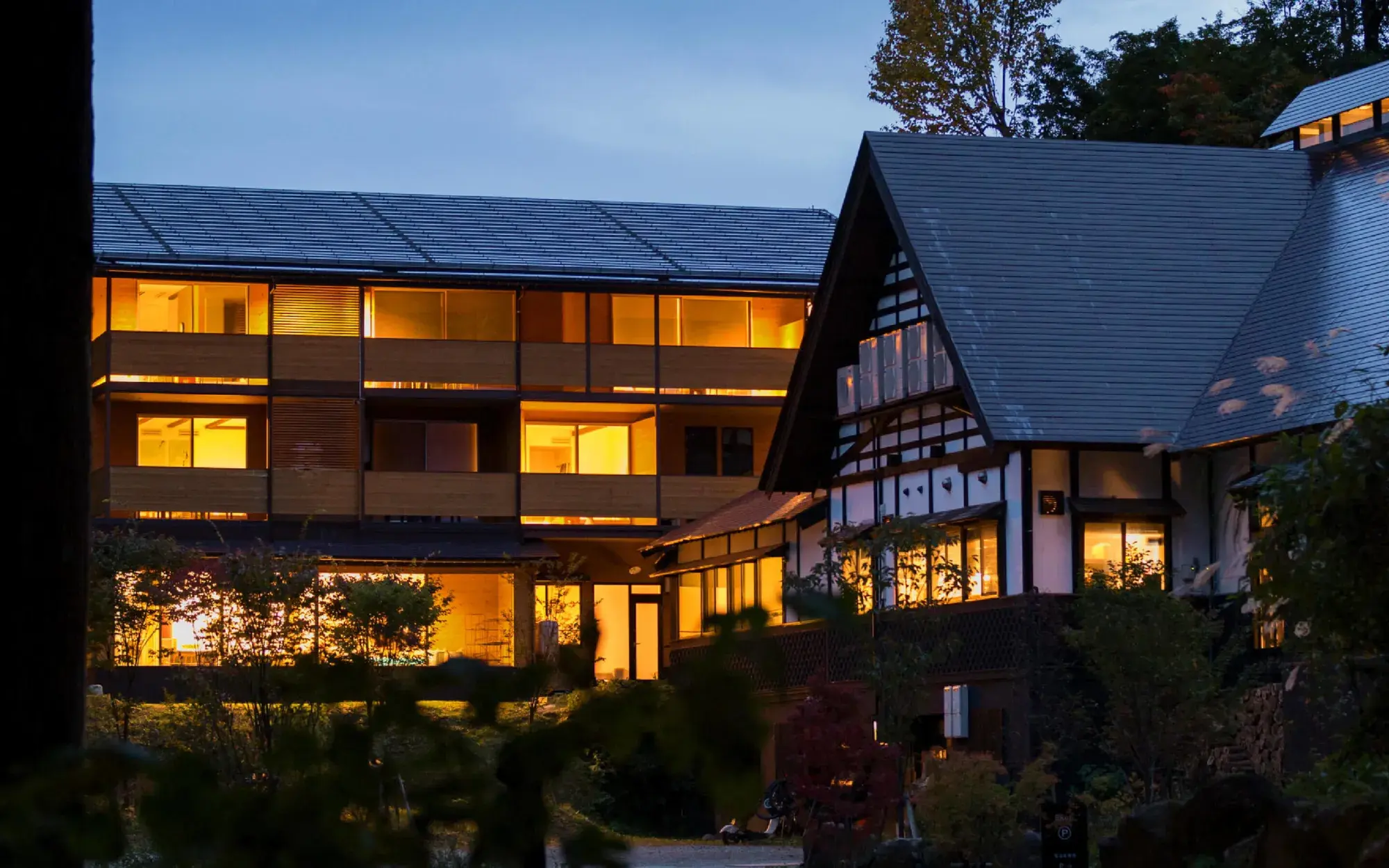 Satoyama JujoOsawayama Onsen, Minamiuonuma
sodium chloride and hydrogen carbonate, 27°C, heated and recirculated
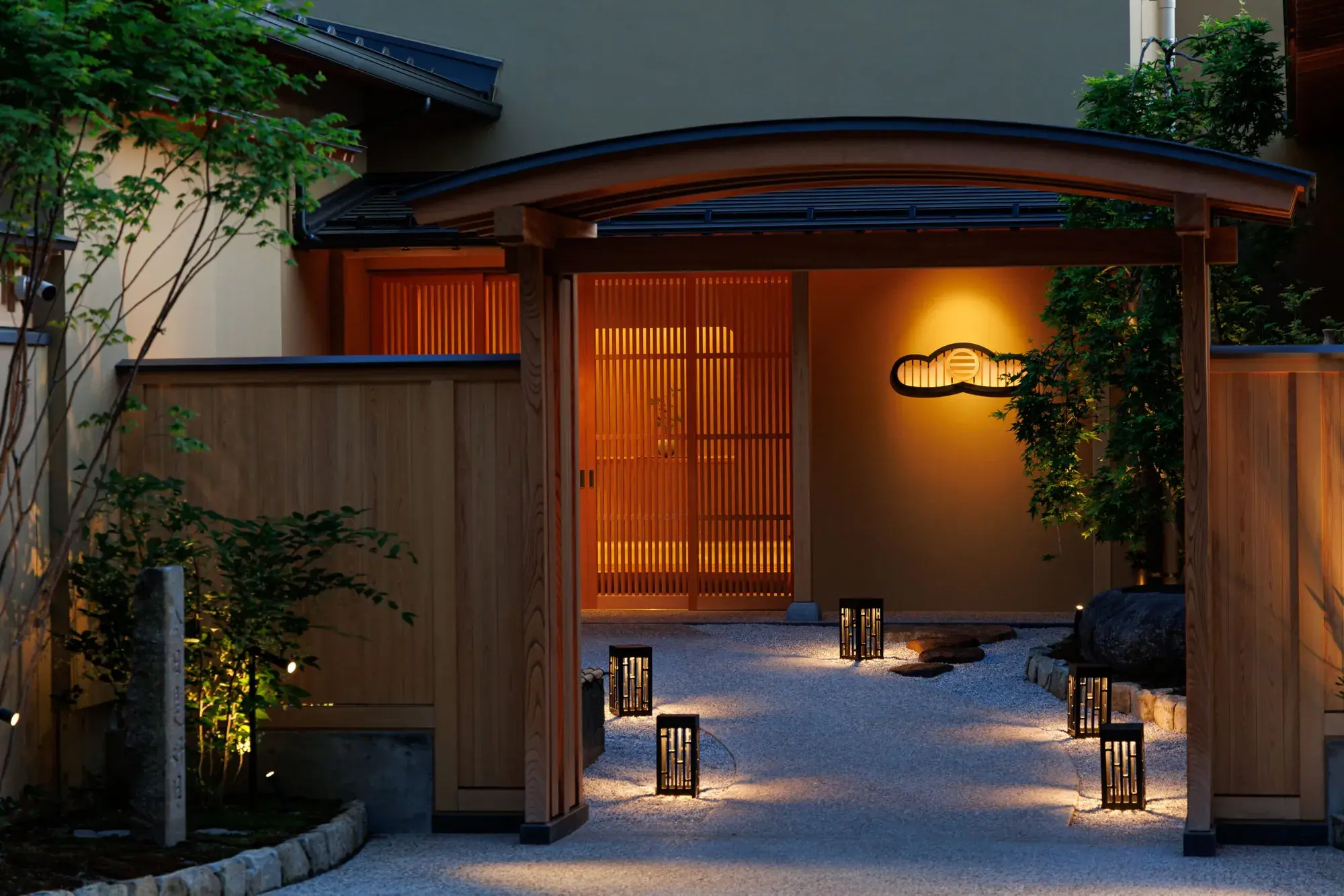
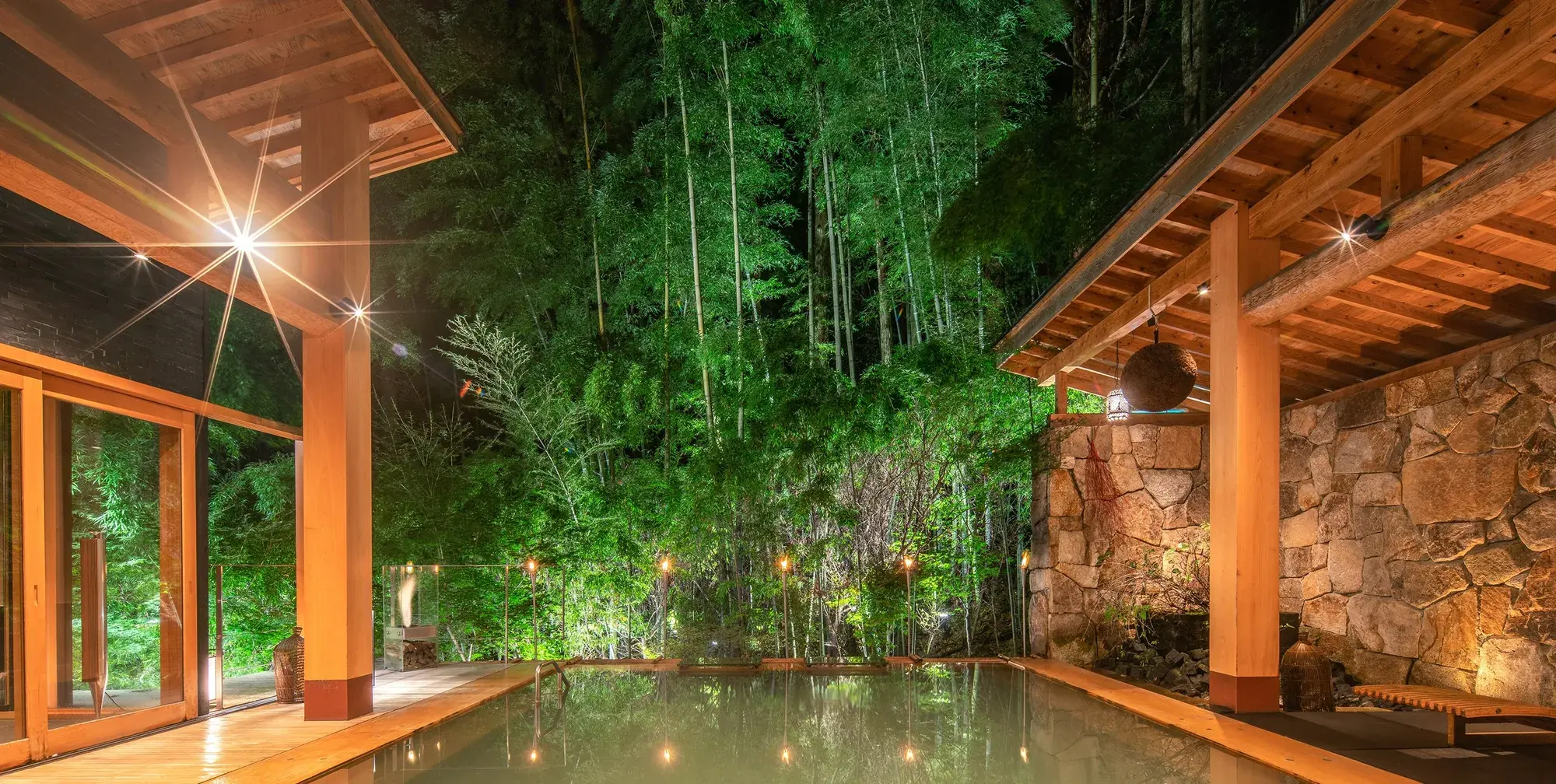 TakefueManganji, Kurokawa Onsen
sodium chloride-bicarbonate with sulphate, no recirculation, heating or water added
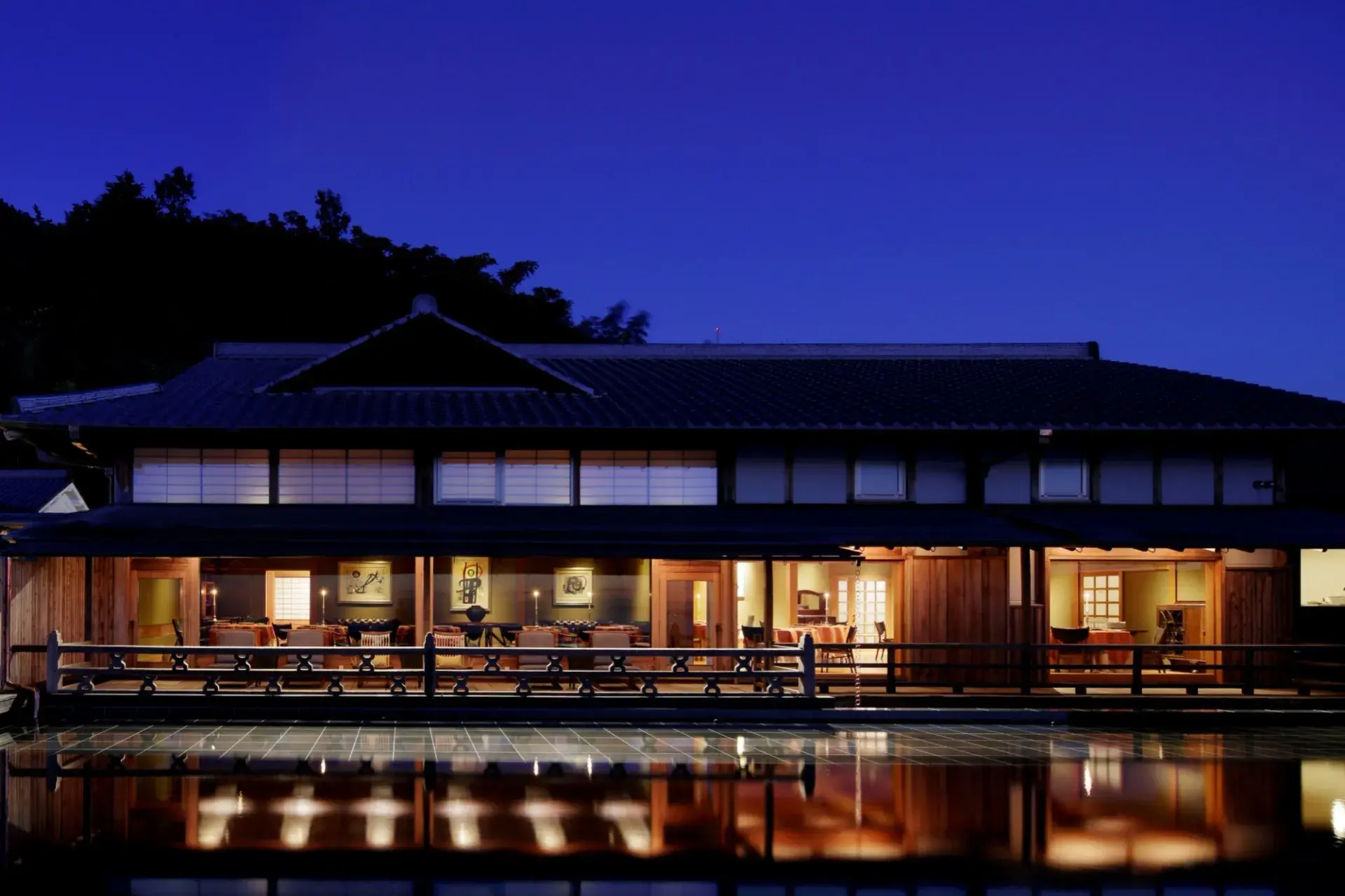
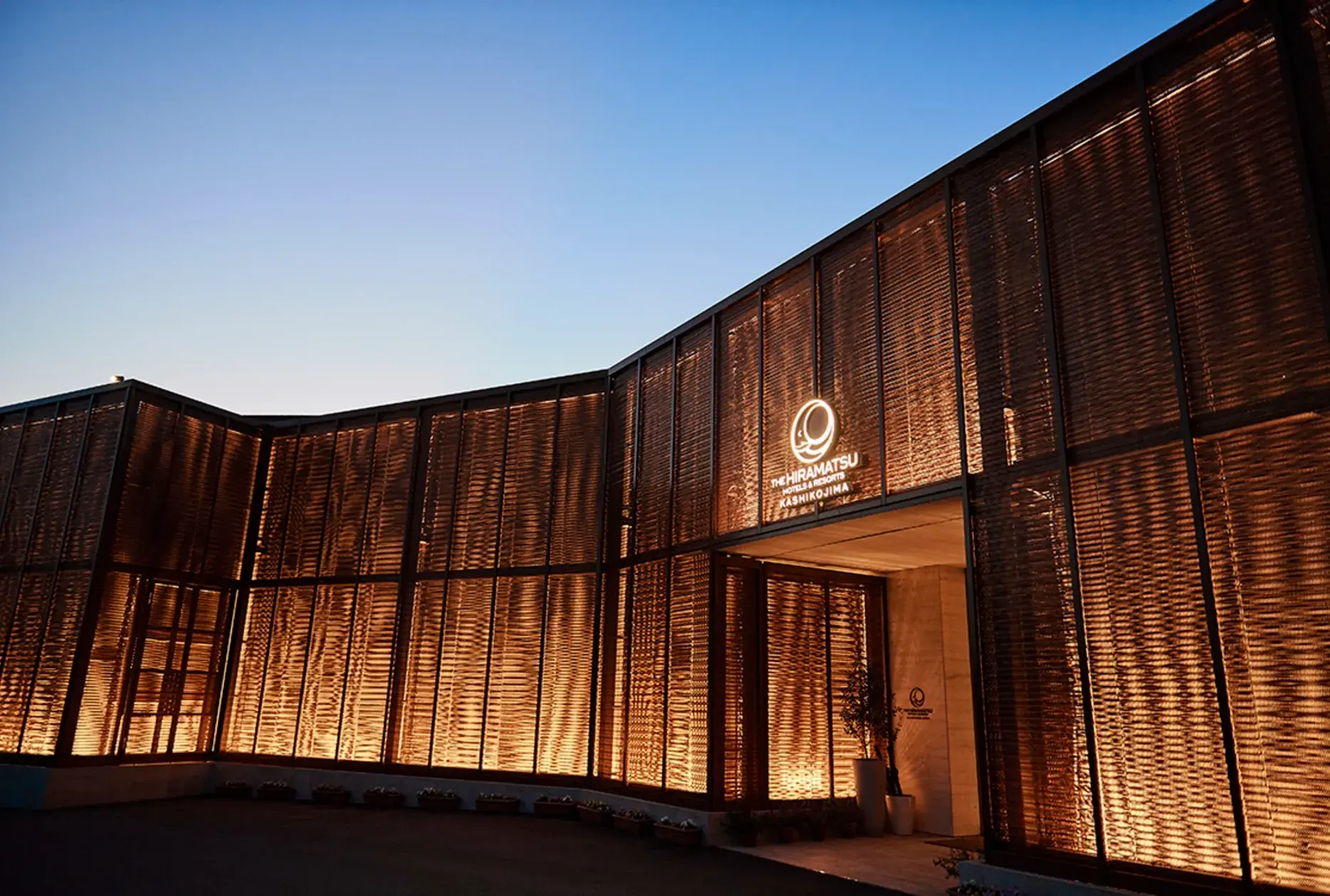 The Hiramatsu KashikojimaUgata, Ise-Shima
a sodium chloride cold mineral spring, circulating in the four annex rooms
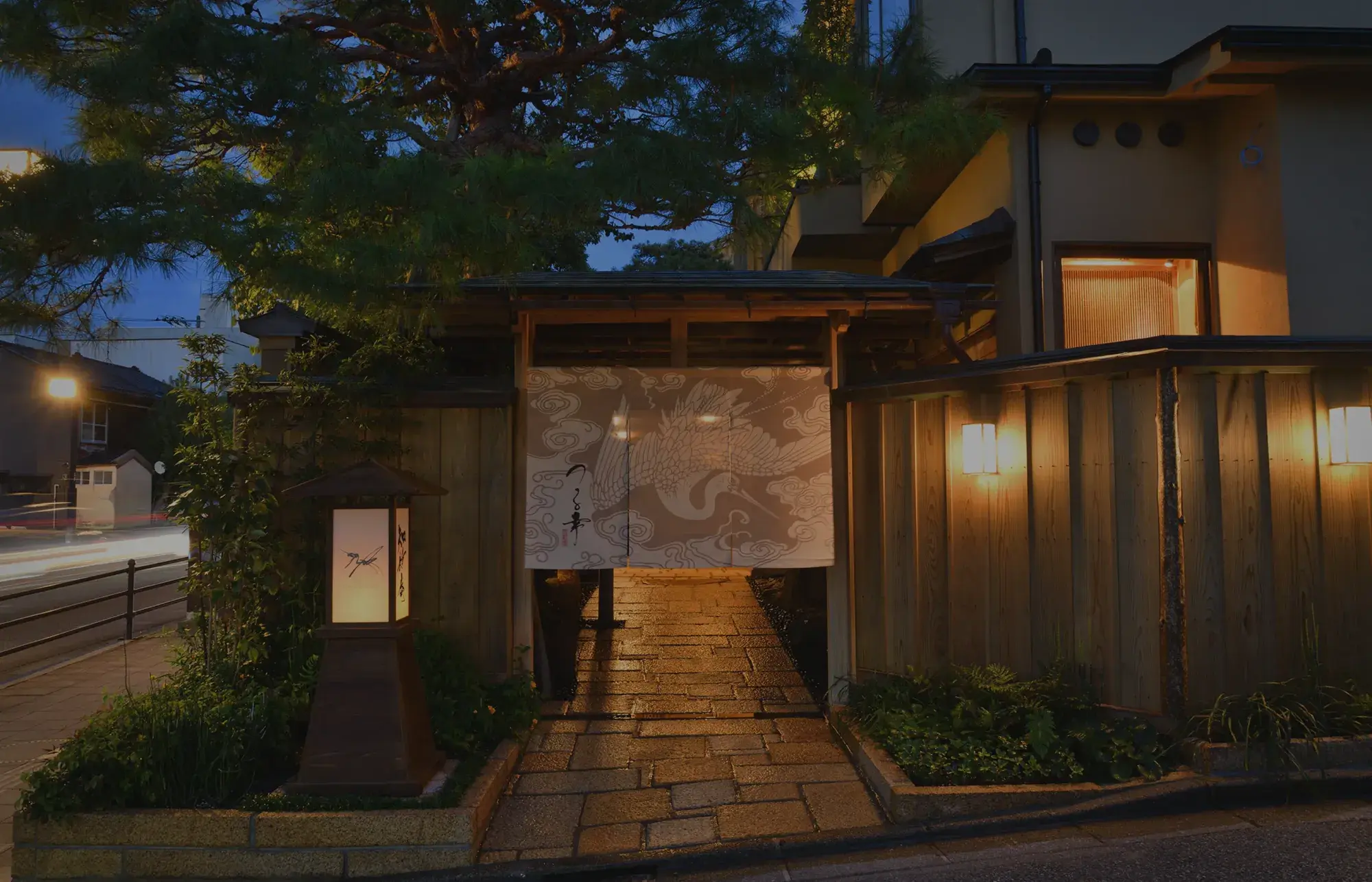
Hydrogen carbonate7
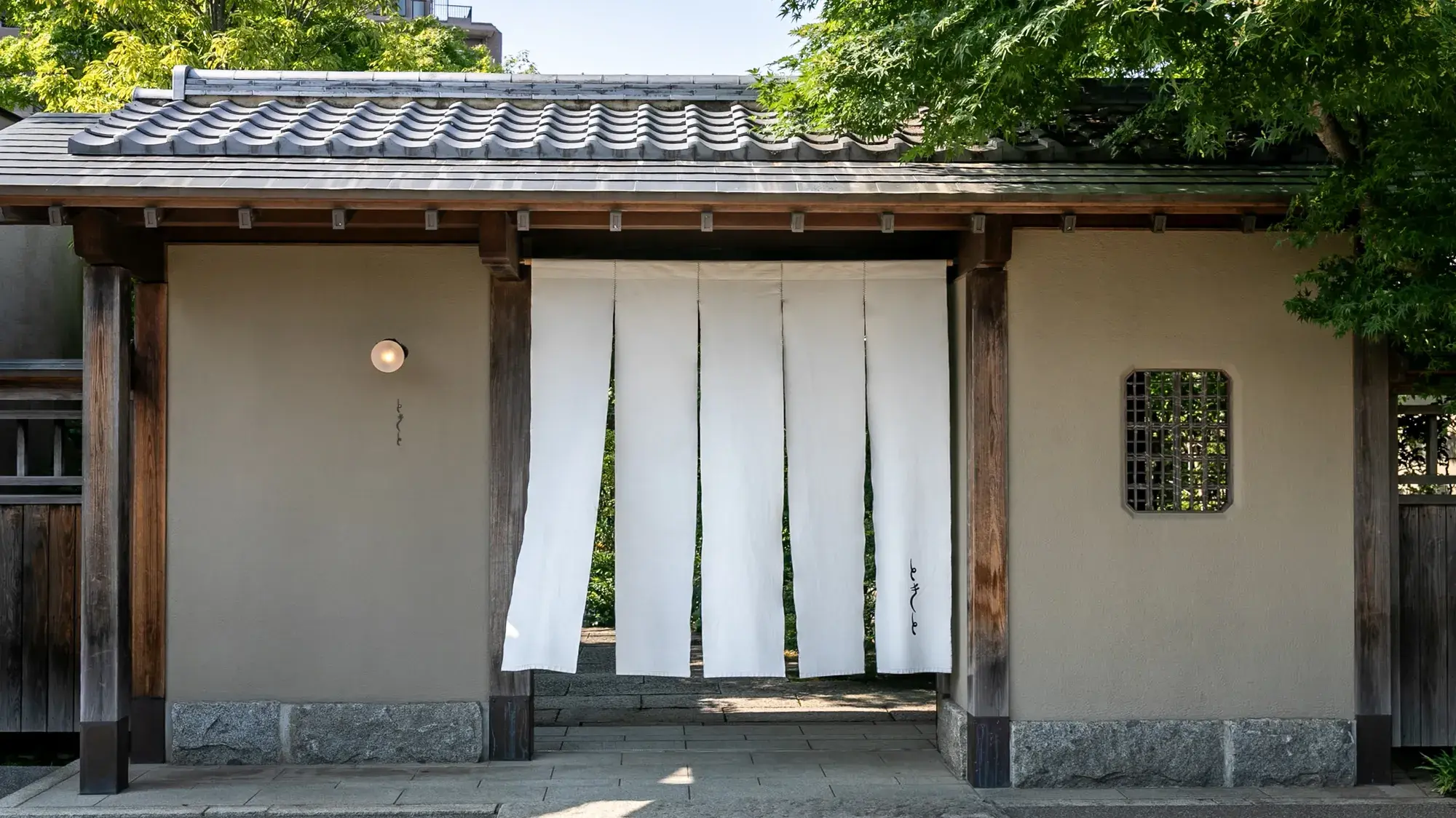 Auberge TokitoNishikicho, Tachikawa
sodium bicarbonate-chloride, 37.2°C, free-flowing in each suite from its own source
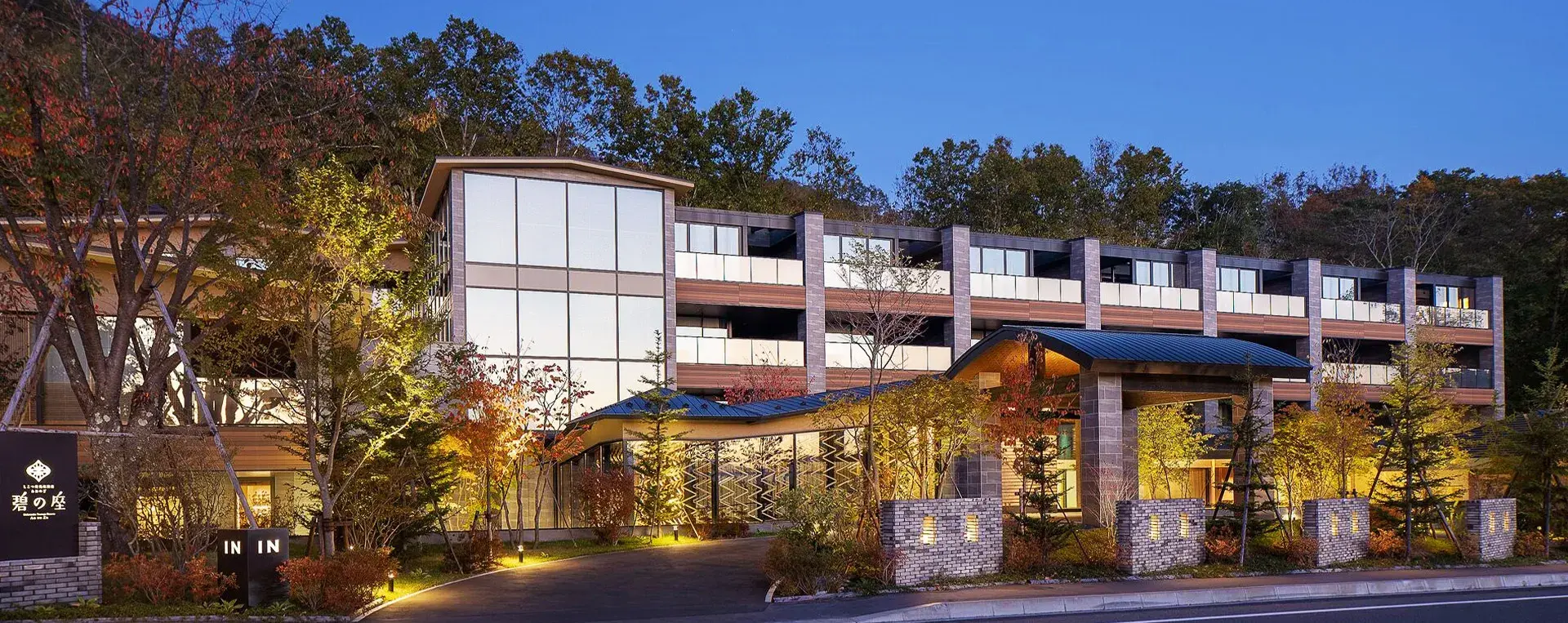 Lake Shikotsu Tsuruga Bessou Ao no ZaShikotsuko Onsen, Lake Shikotsu
soft and slippery; recirculated, filtered and chlorinated in the suites
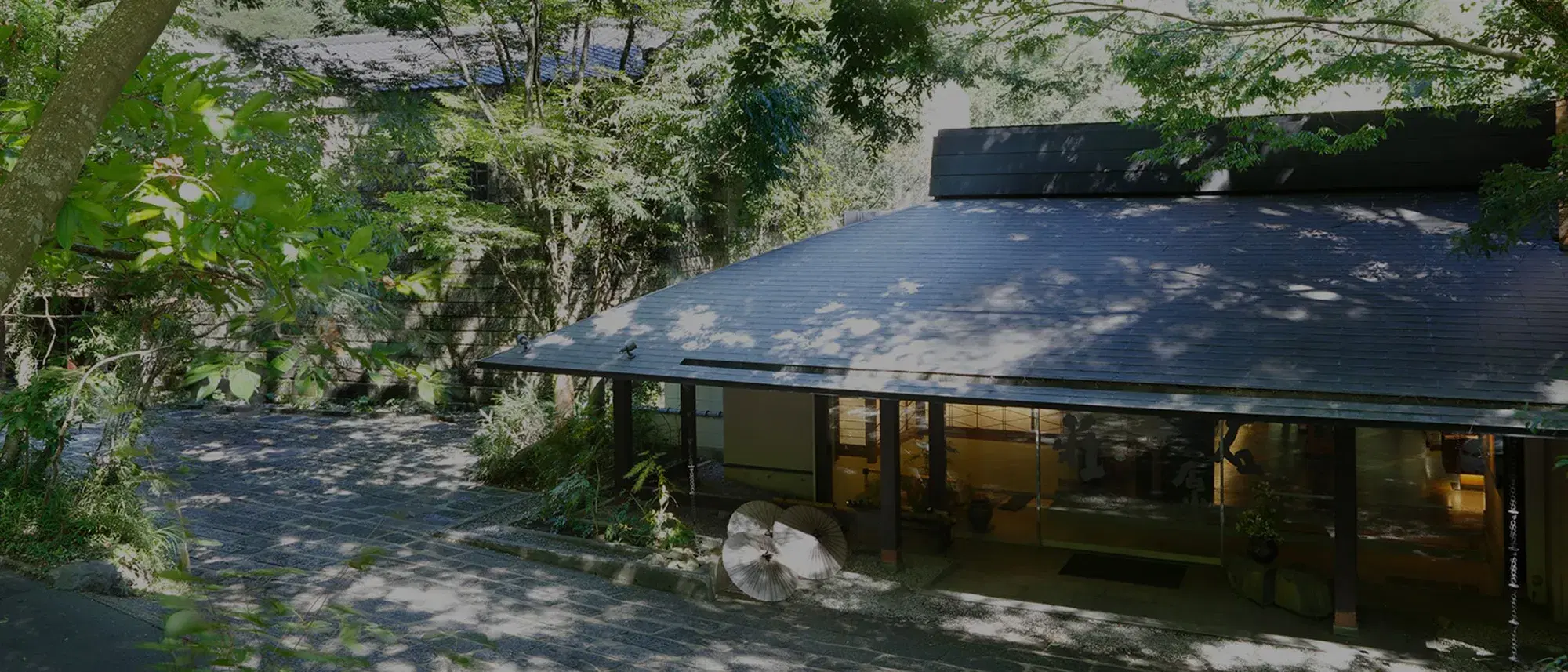 Myoken IshiharasoMyoken Onsen, Kirishima
rich in metasilicic acid, no water added or heating, cooled by heat exchanger
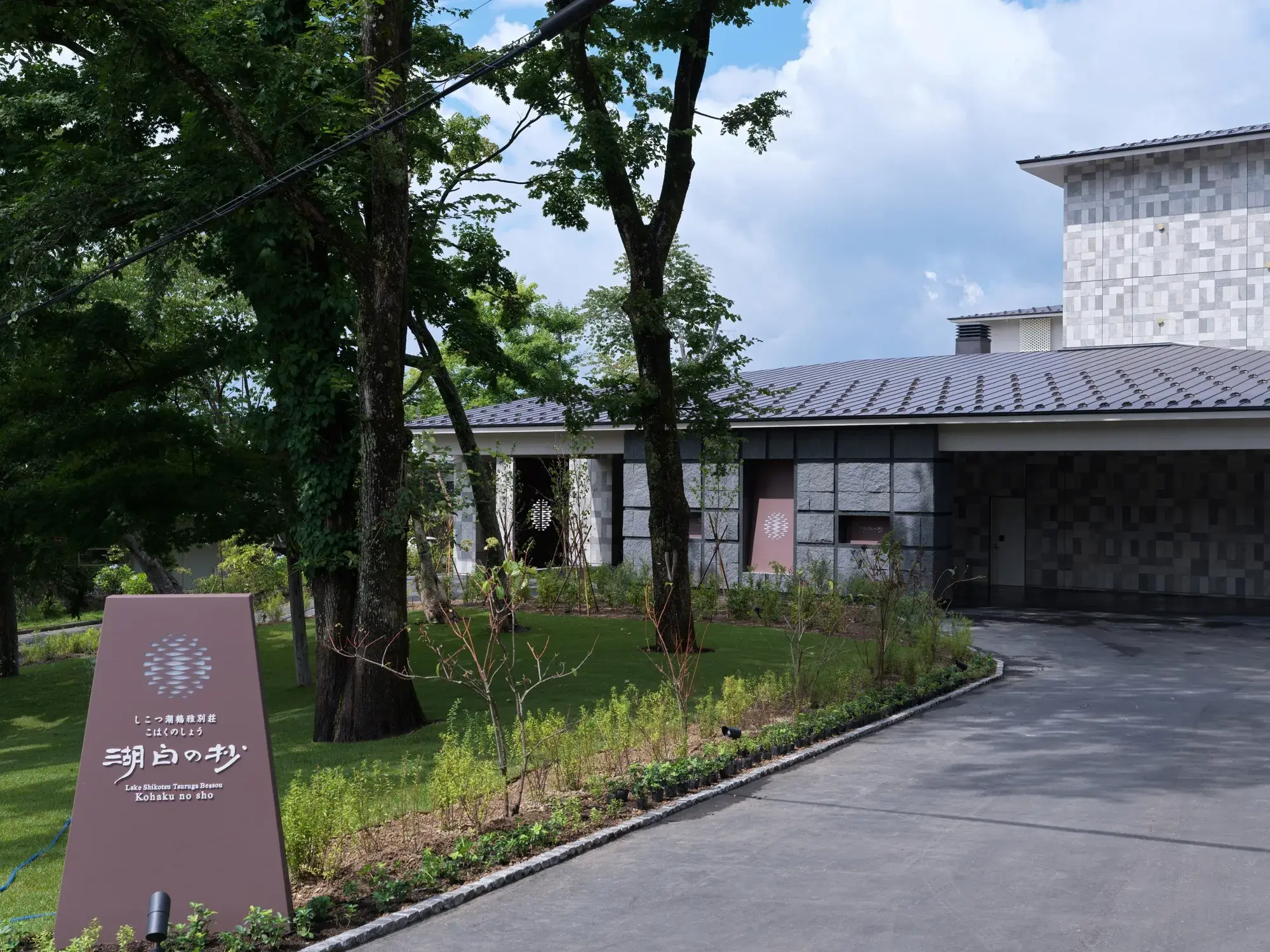 Shikotsuko Tsuruga Besso KohakunoshoShikotsuko Onsen, Lake Shikotsu
bicarbonate, in every room's bath
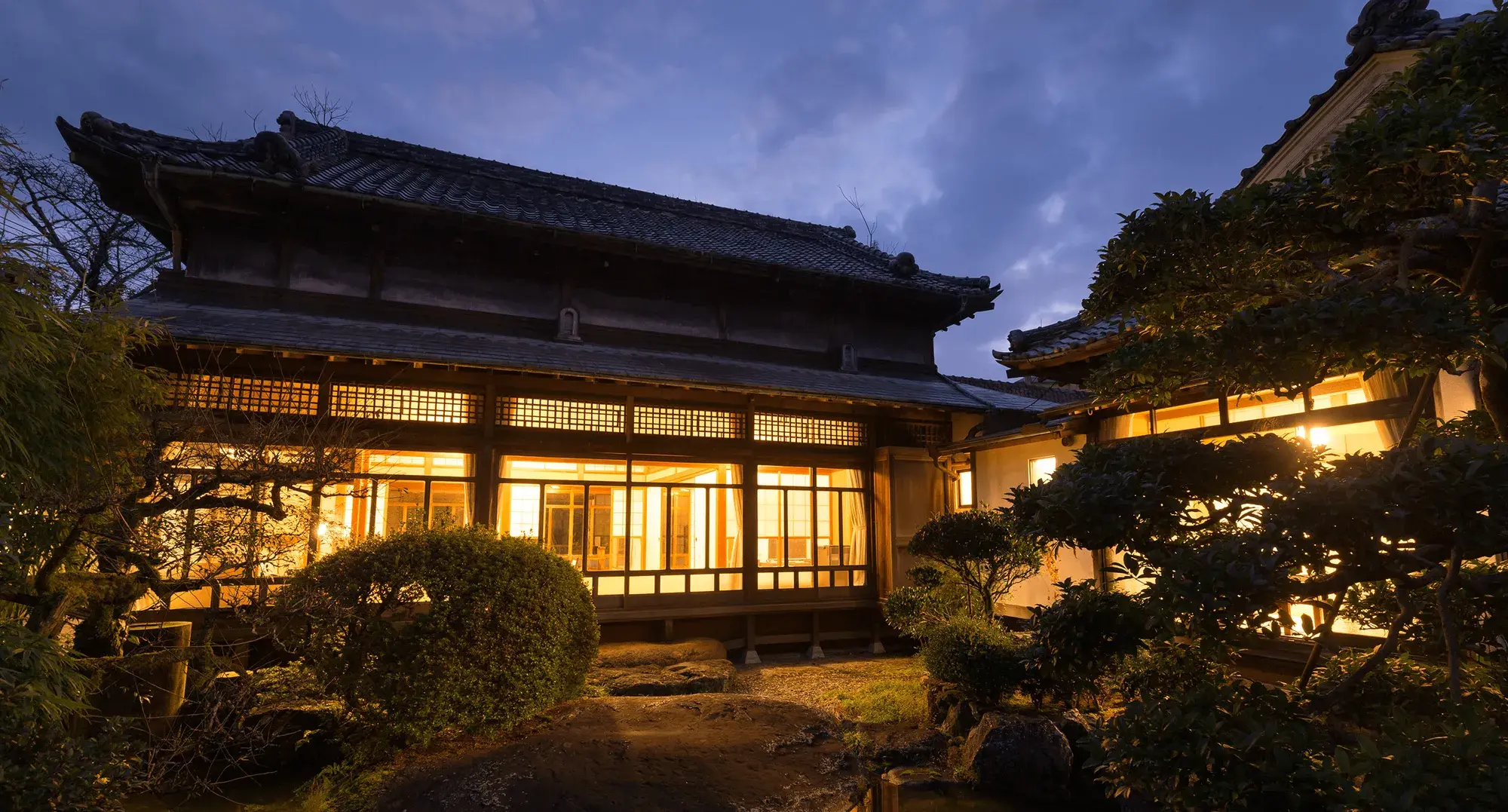
The other 2
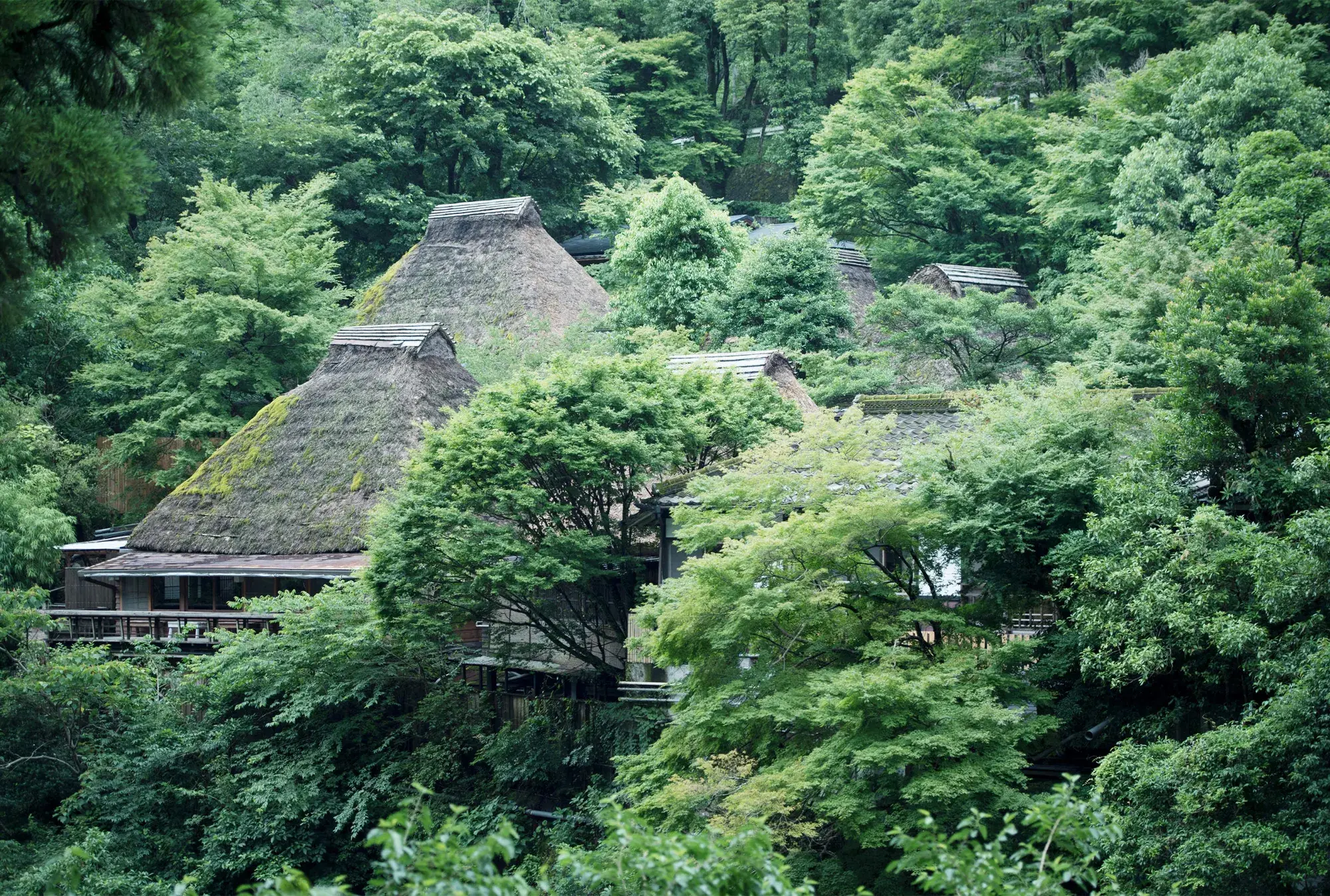 Wasure no Sato GajoenMyoken Onsen, Kirishima
neutral, pH 6.6, free-flowing with no recirculation, heating or chlorination
Sulphate8
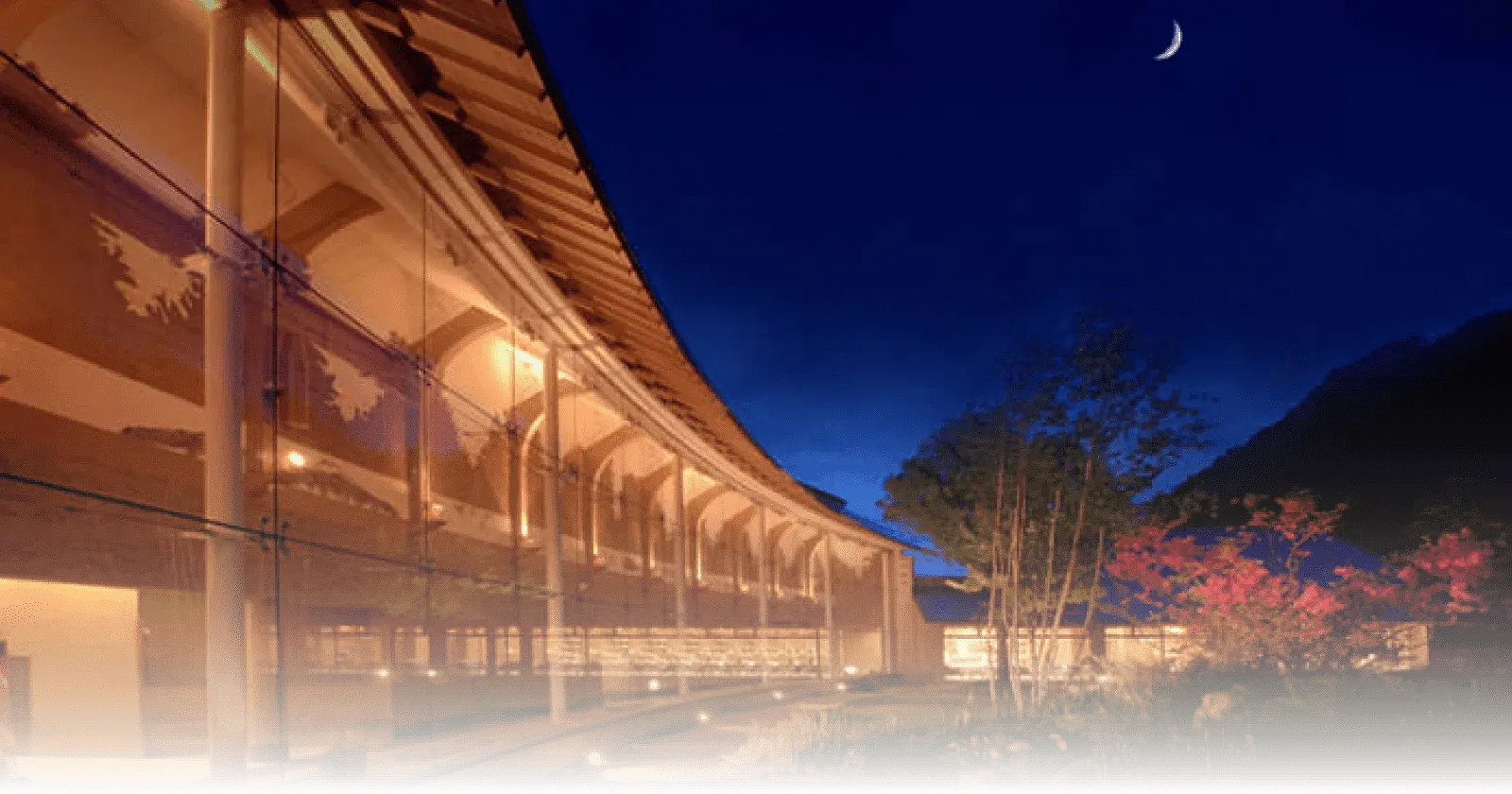 Bettei SenjuanTanigawa Onsen, Minakami
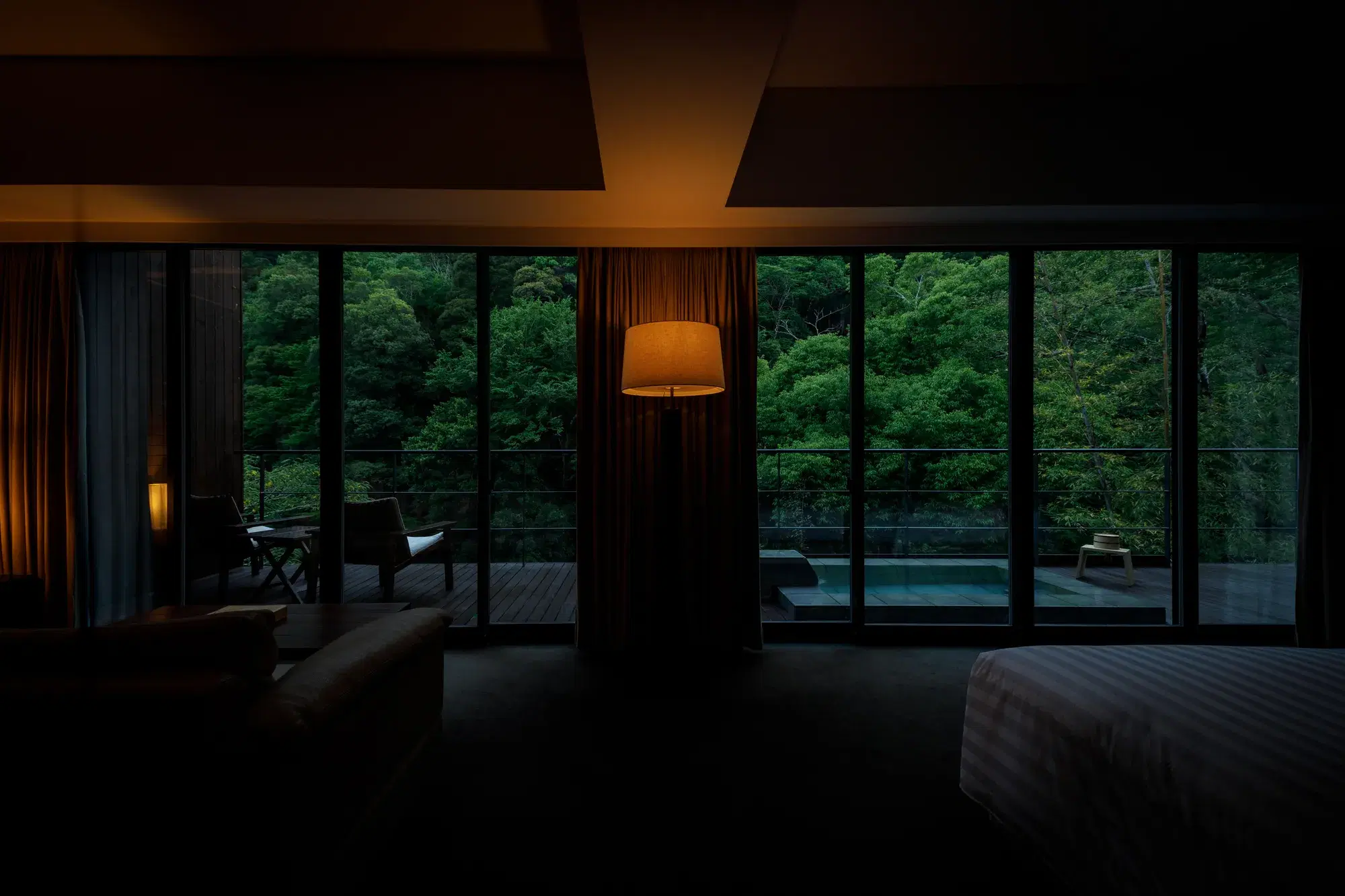
calcium-sodium sulphate-chloride, pH 8.04, free-flowing, heated in winter when needed
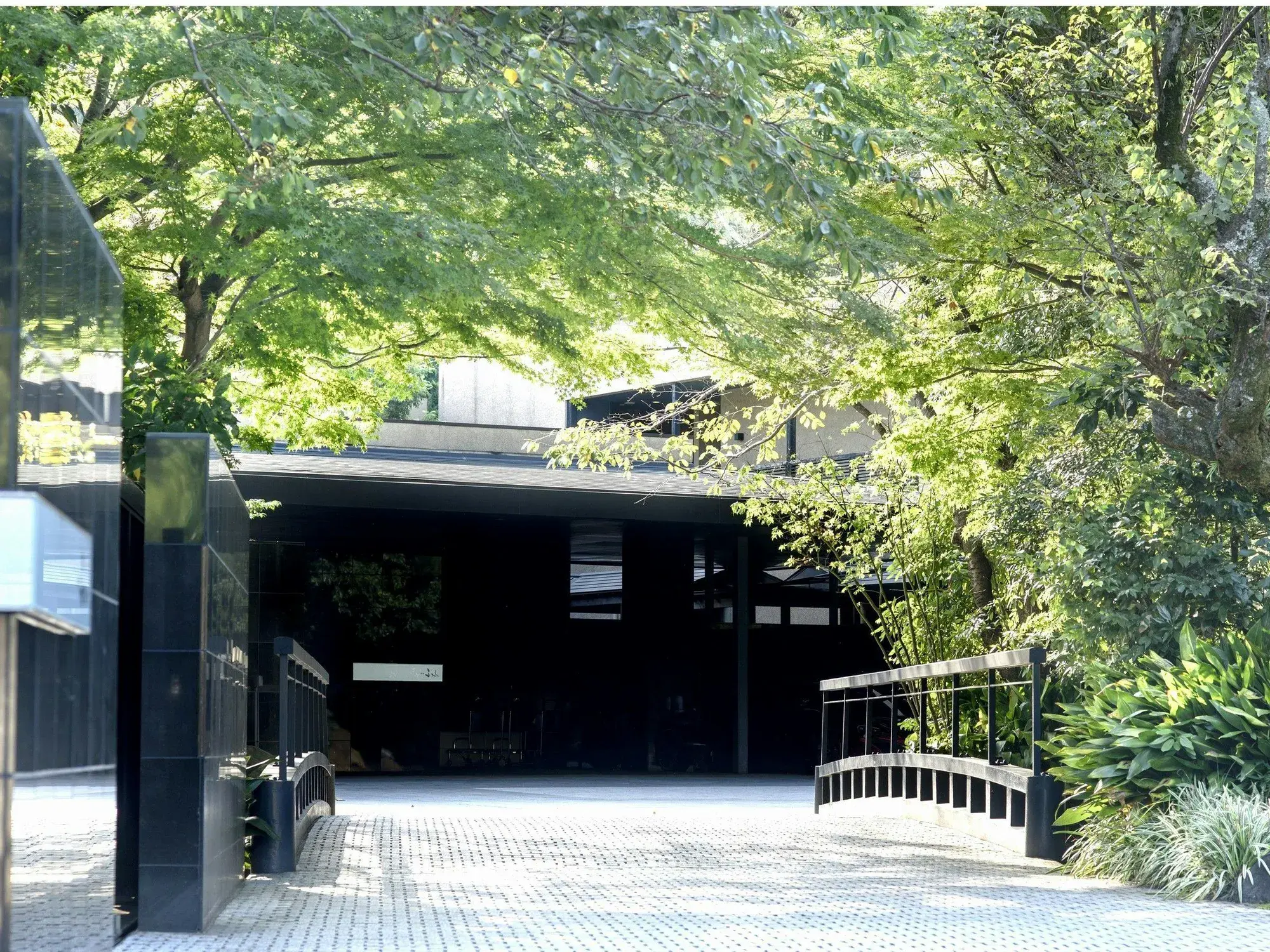 Fufu AtamiMinaguchi-cho, Atami
calcium-sodium sulphate-chloride from its own source, free-flowing in the room baths
The other 3
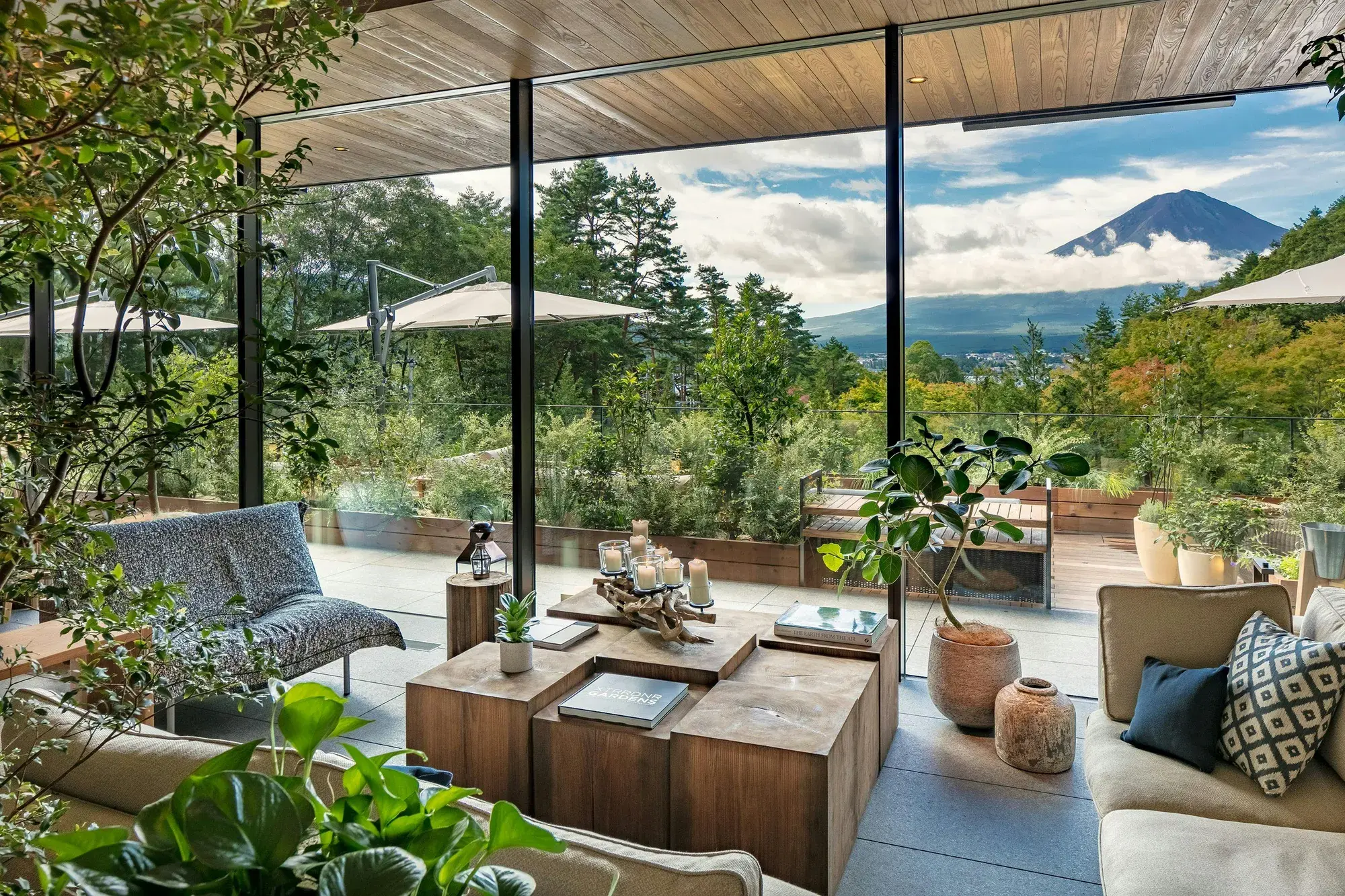
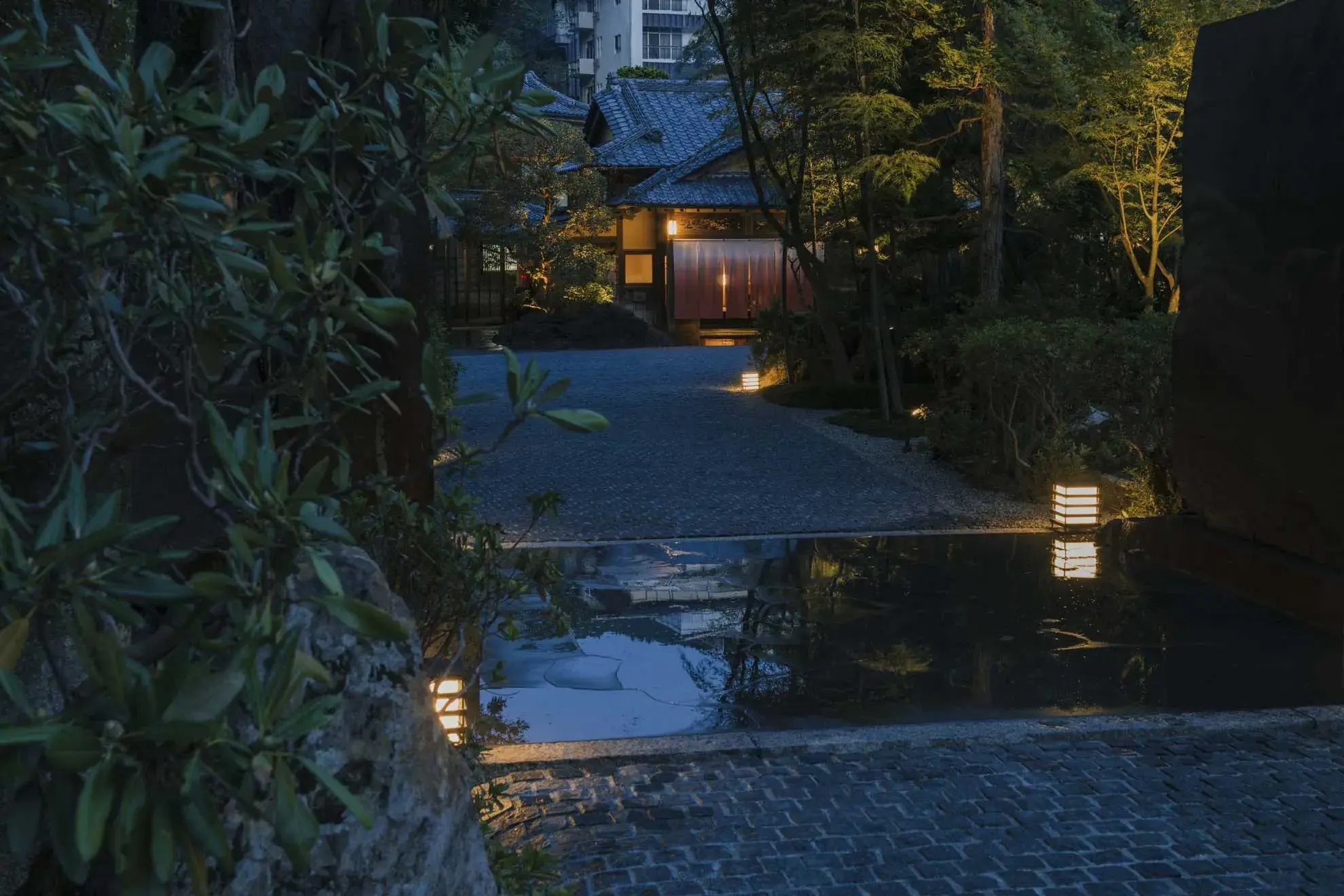 OchiairoAmagi Yugashima Onsen, Izu
calcium-sodium sulphate, hypotonic, weakly alkaline and high-temperature
Sulphur2
Chloride springs with enough sulphur to count as sulphur springs too.
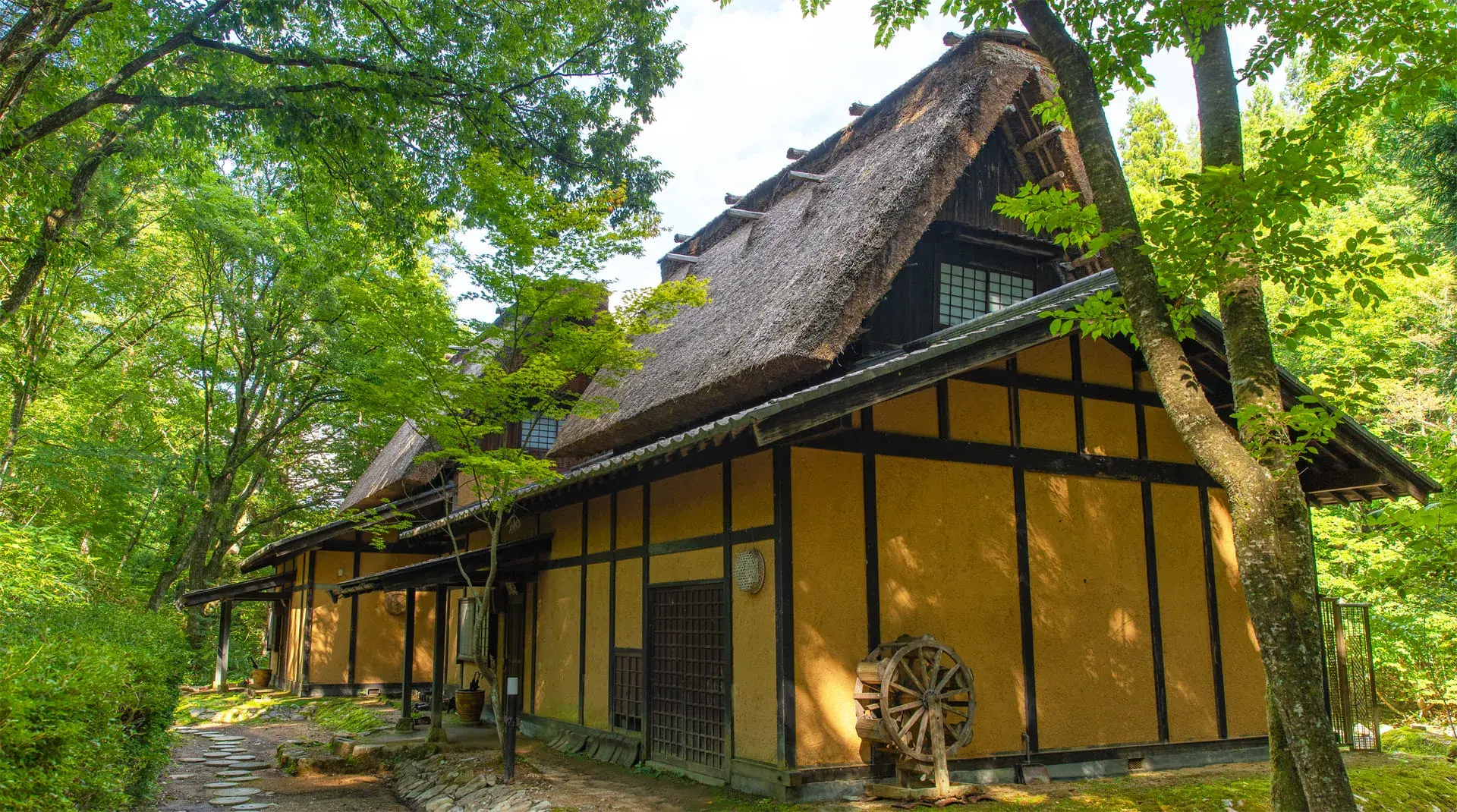 WanosatoIchinomiya, Takayama
sulphur-bearing sodium and calcium chloride, free-flowing in the shared baths
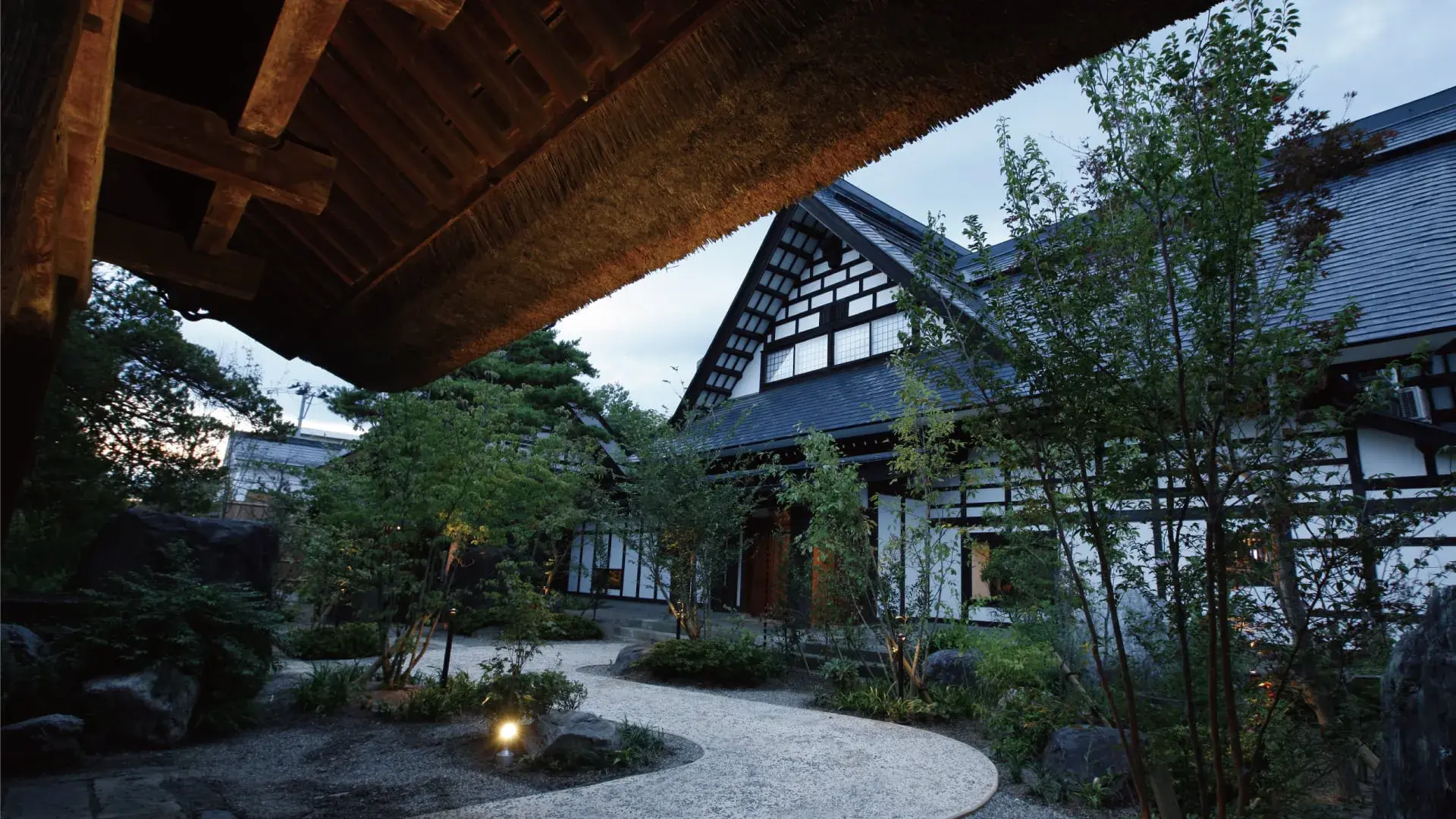 Yamagata The TakinamiAkayu Onsen, Nanyo
sulphur-bearing sodium-calcium chloride, neutral and hypotonic, no water added
Acidic2
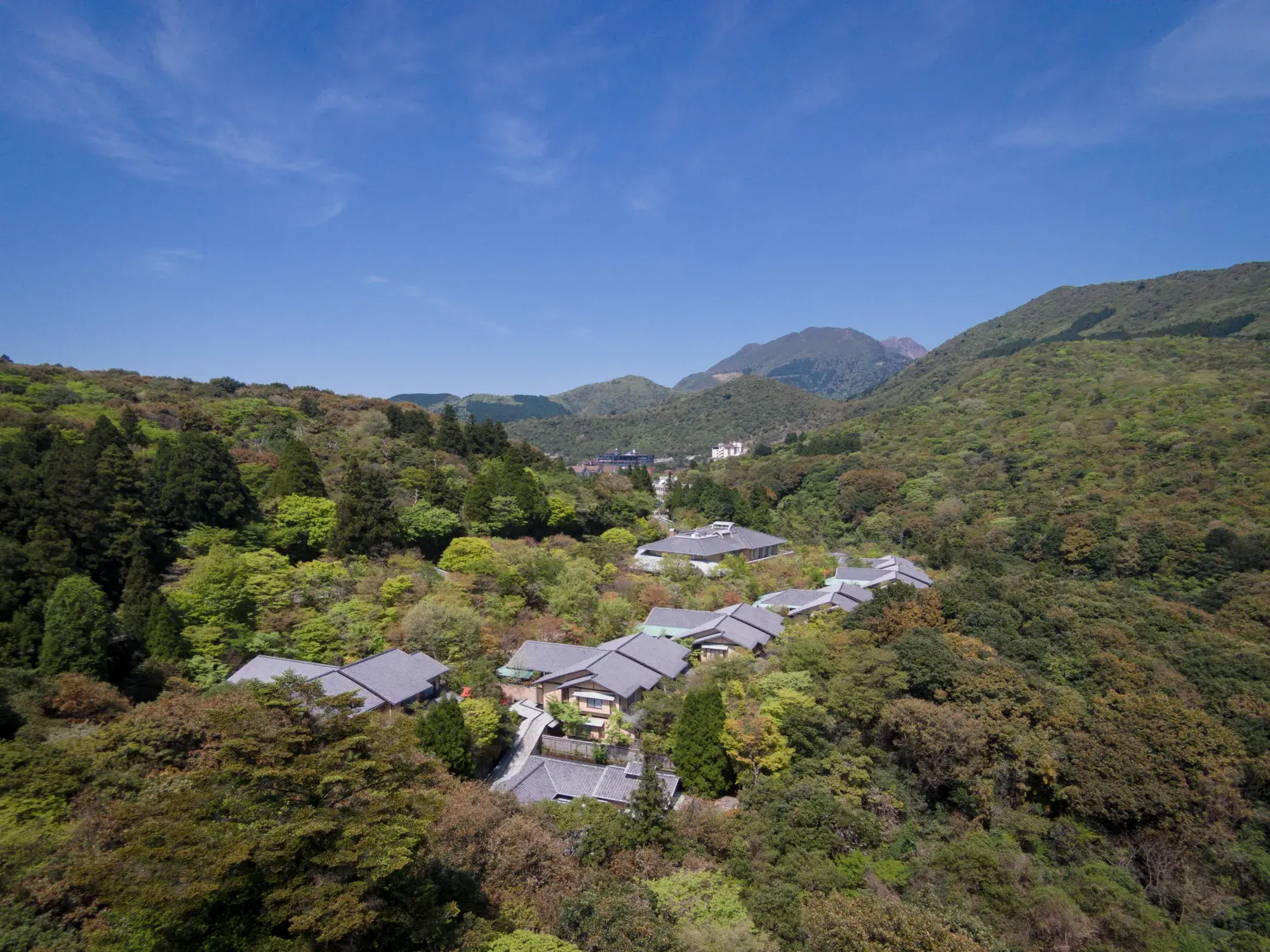
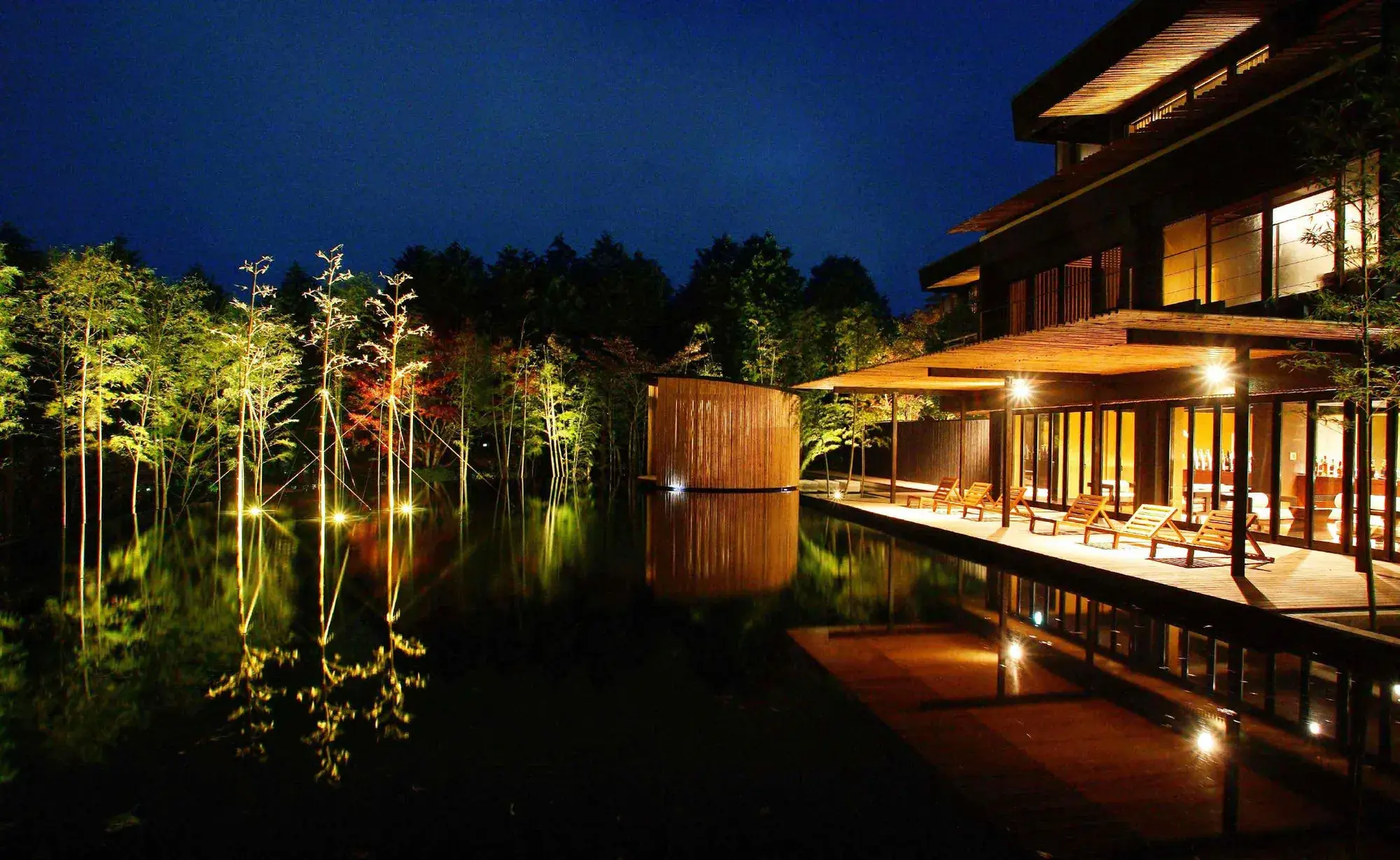 Kinnotake SengokuharaSengokuhara, Hakone
acidic calcium sulphate chloride from Owakudani, milky, free-flowing
Carbon dioxide1
Not analysed: the record calls it a naturally welling carbonated spring.
Radioactive2
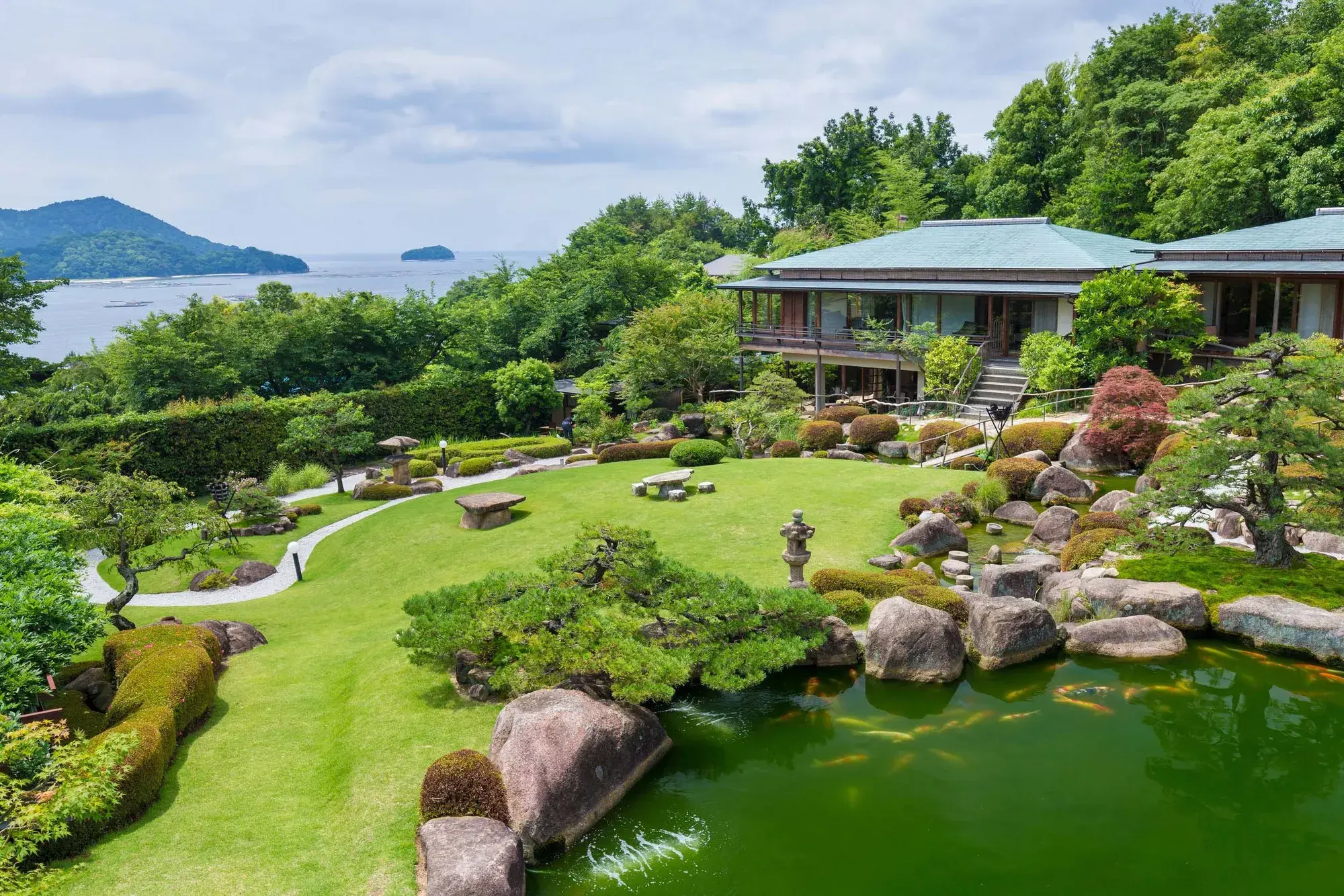 SekiteiMiyahama Onsen, Hatsukaichi
simple weak radioactive (radon), hypotonic, alkaline and low-temperature
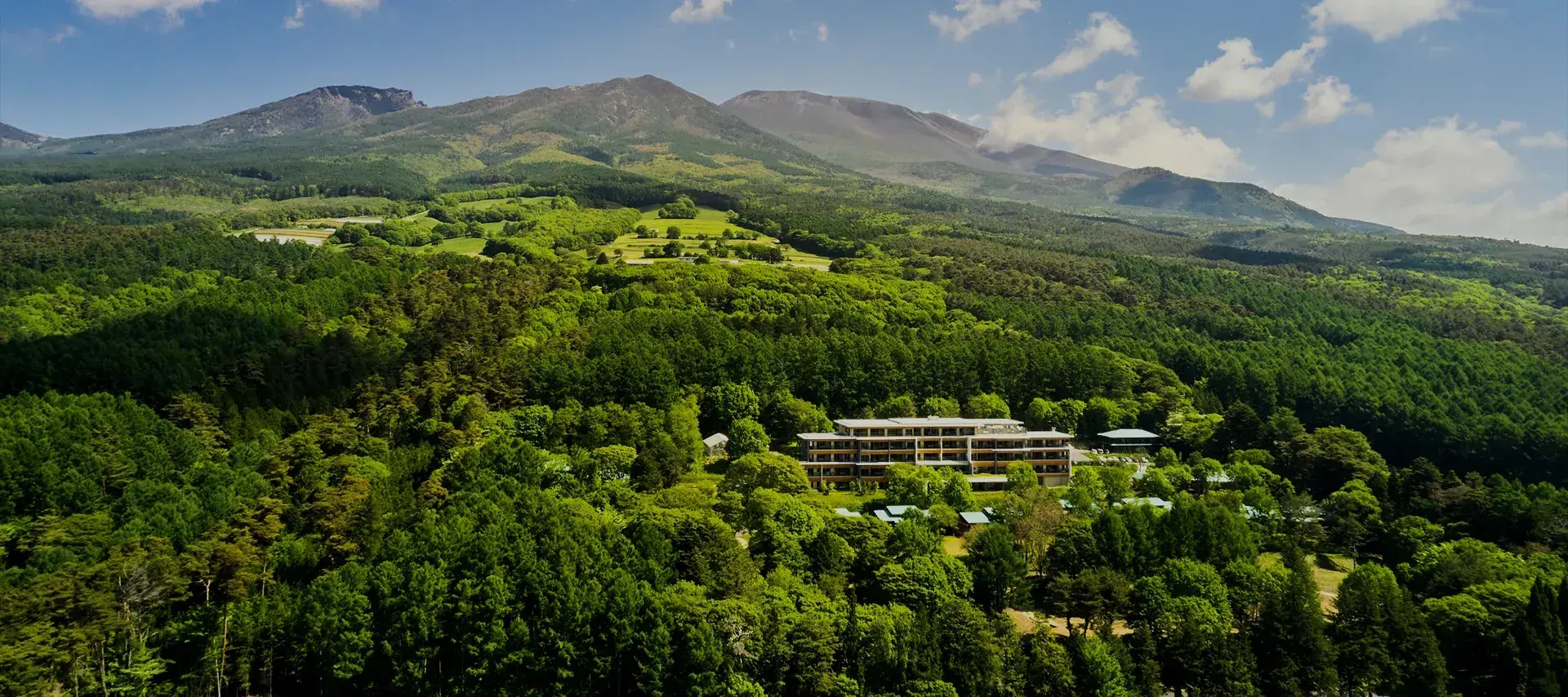 The Hiramatsu Karuizawa MiyotaShiono, Miyota
simple weak radioactive spring from Oshio Onsen, heated and recirculated