Shun, hashiri and nagori
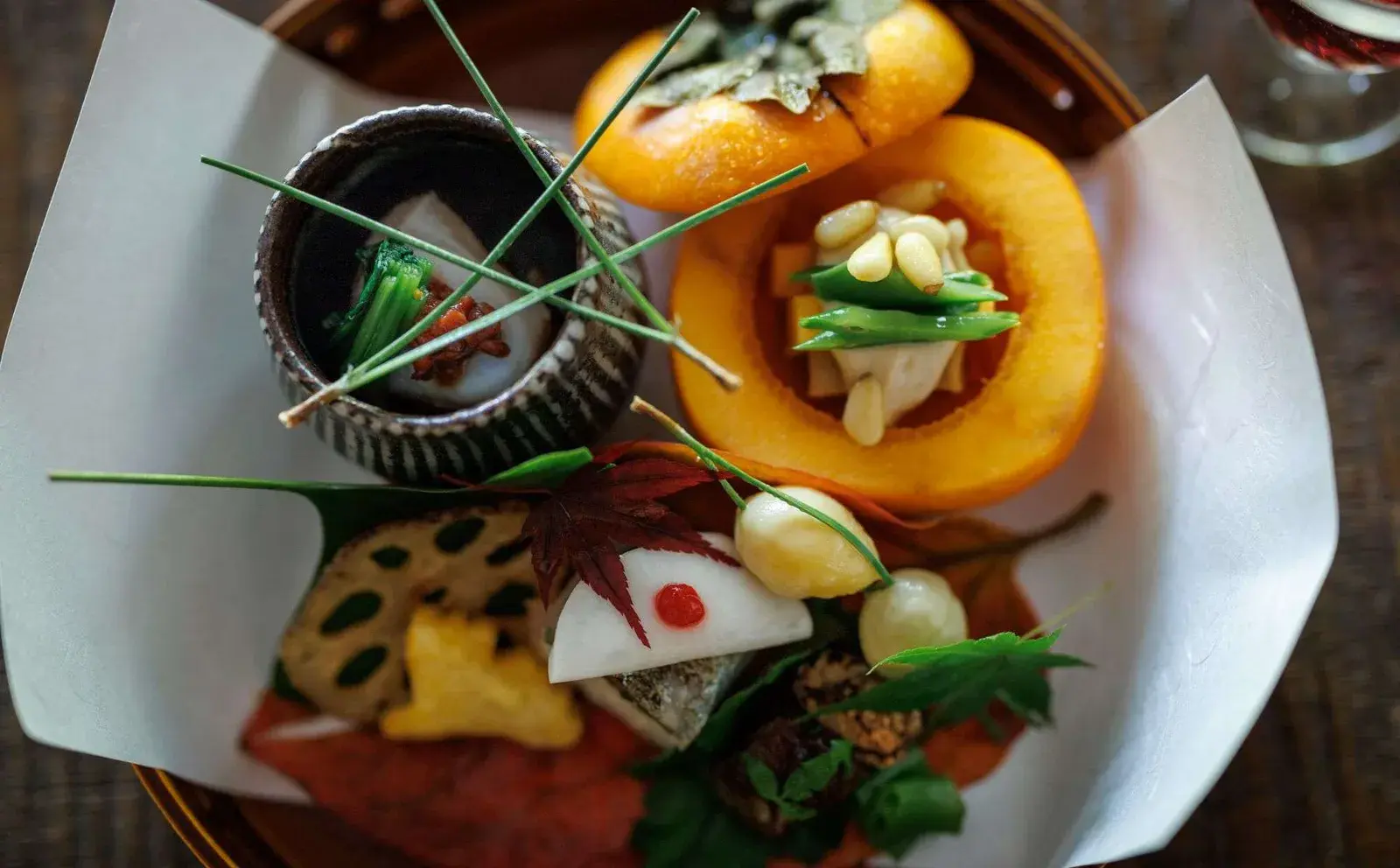
Japan's Ministry of Agriculture describes shun as the seasonal peak of a fish or vegetable, hashiri as the early part of its season, when produce is just starting to ripen, and nagori as the end, when it is past its prime. A kaiseki kitchen plays the three against each other: the first of one thing beside the last of another tells you the month as surely as the scroll in the alcove. Our guide to kaiseki explains the courses themselves.
Some inns write the calendar into the menu. Kinnotake Tonosawa changes its kaiseki with eight seasonal divisions of the year; Yoruya in Kurashiki changes its counter course with the 24 solar terms and 72 micro-seasons of the old calendar. Gora Kadan, Hakone Ginyu, Takefue, Onyado Chikurintei and Ryotei Hanzuiryo change theirs every month.
The year in four seasons
The ingredients below are the ones the inns on our list name, with the regions known for them.
- Spring, March to May: takenoko (bamboo shoots), best known from the Nishiyama and Oharano hills west of Kyoto. Beniya Mukayu in Kaga offers a bamboo-shoot course in spring.
- Summer, June to August: ayu, the river sweetfish, whose fishing season opens around June on many rivers; hamo (pike conger); abalone. Ryokan Kurashiki adds a hamo kaiseki, IKI Retreat Kairi Murakami grills wild black abalone with sea urchin from late April to late September, and Yoyokaku serves okoze (stonefish).
- Autumn, September to November: matsutake, from the red-pine woods, prized since the Heian court. Beniya Mukayu, Ryotei Hanzuiryo and Tsuruko, with Noto matsutake, all serve it; Kofuyuden Beniya has an autumn plan of Wakasa tiger puffer.
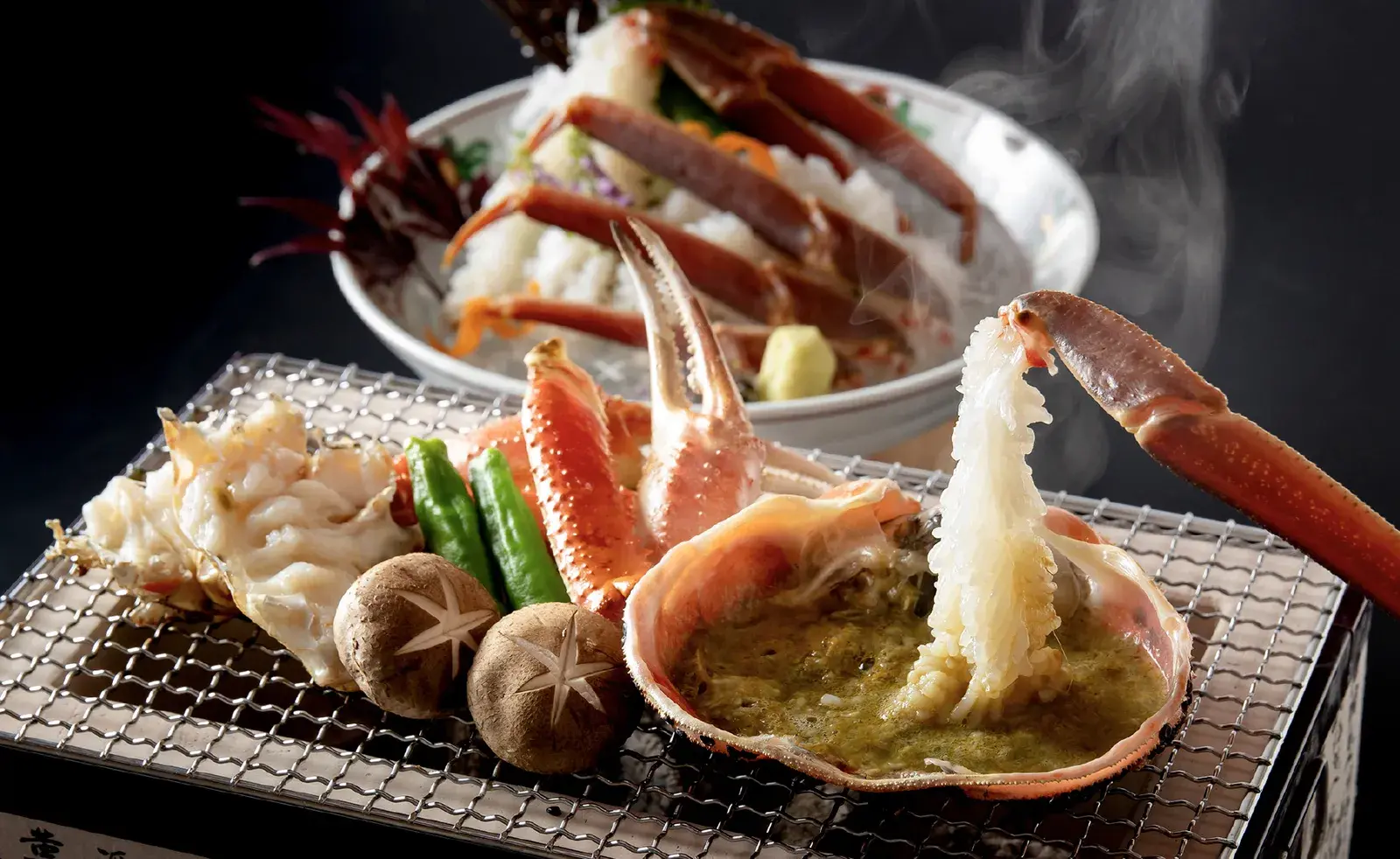
- Winter, November to March: snow crab, whose fishing opens on 6 November and closes on 20 March, sold as Echizen crab in Fukui, Matsuba crab in Hyogo and Tottori and Kano crab in Ishikawa, with the smaller female (seiko in Fukui, kobako in Ishikawa) served only to the end of December at the inns on our list; and fugu, which JNTO notes comes into season in winter.
When to go where
Winter belongs to the Sea of Japan coast. Nishimuraya Honkan in Kinosaki serves Matsuba crab courses from November to March; Kofuyuden Beniya at Awara keeps live crab from Mikuni and Echizen ports in its own tanks; Hitotsu Notojima adds kobako and Kano crab to its sushi course from 7 November 2026 to 20 March 2027. Inland the winter dishes change: wild-duck hotpot at The Kayotei from December to February, bear, boar and venison at Miyamasou, oyster miso hotpot at Ryokan Kurashiki, its winter speciality.
Kyushu is the other winter table. Ryotei Hanzuiryo puts fugu into its monthly hon-kaiseki, and Yoyokaku in Karatsu serves ara (kue) and fugu. In summer, go the other way: Iki for abalone, which the inn takes off the menu from 1 October to about 4 January, and the Inland Sea for hamo at Kurashiki.
Spring and autumn are for Kaga and the mountains: Beniya Mukayu's bamboo shoots in spring and its matsutake in autumn, and Tsuruko's Noto matsutake kaiseki in late autumn.
Asking for the season
Most seasonal dishes are extras, booked ahead: Beniya Mukayu's three seasonal dishes must be ordered in advance, Ryokan Kurashiki's upgrades three days before. Tell the inn, or us, what you came for. On a second night, check whether the menu changes: Tsuruko serves the same menu each night, Naoshima Ryokan Roka a new one. Dietary needs are in our guide to vegetarian ryokan.
Seasonal dishes at the inns on our list
Every inn on our list whose record names a seasonal dish, by season, and those whose menu follows the calendar month by month. An inn may appear in more than one season.
On our list
Spring1
Summer4
 Iki Retreat Kairi Murakami by Onko ChishinYunomoto Onsen, Iki
Kairi-yaki, wild black abalone grilled with sea urchin, late April to late September
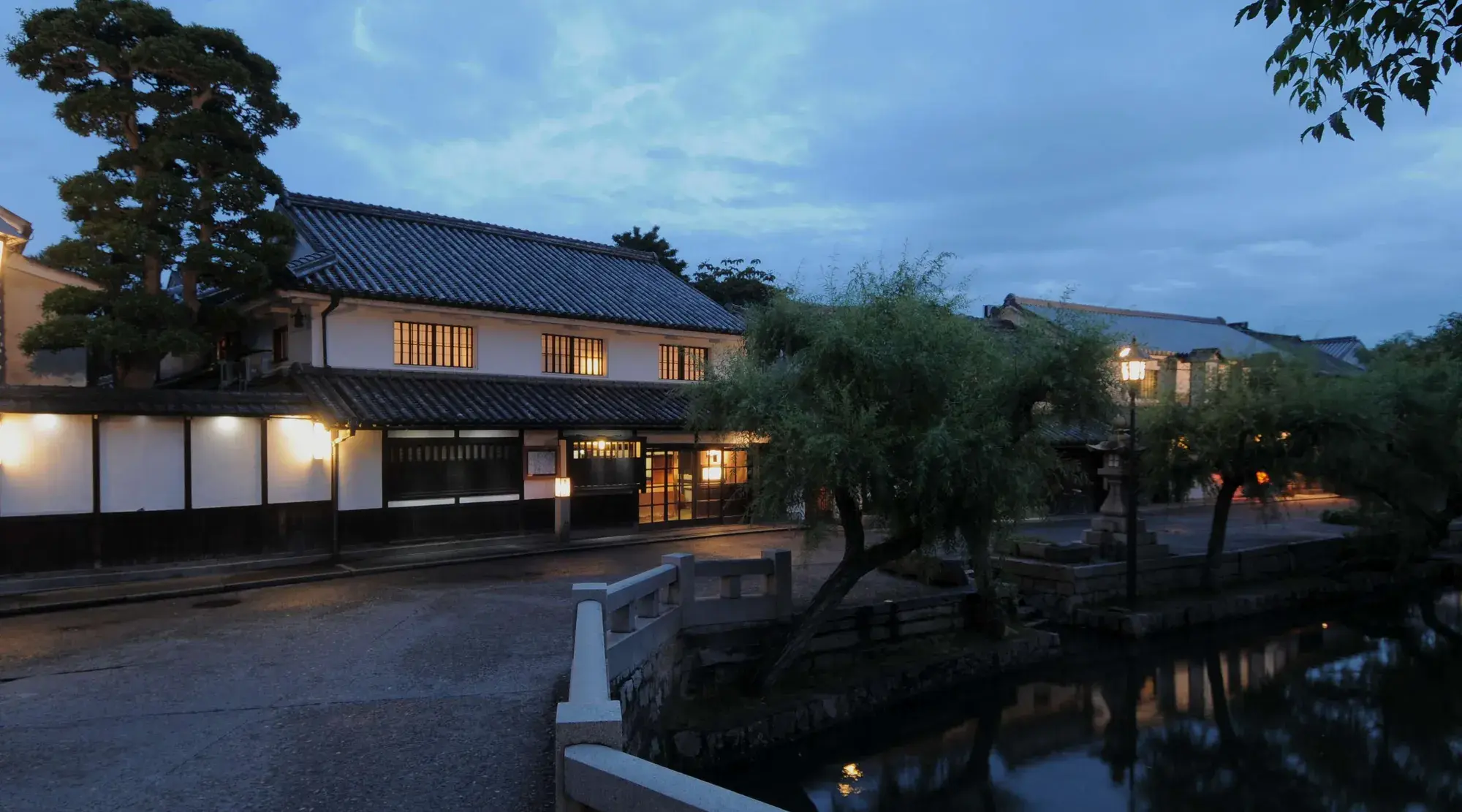 Ryokan KurashikiBikan Historical Quarter, Kurashiki
a hamo (pike conger) kaiseki, booked three days ahead
Autumn5
Winter9
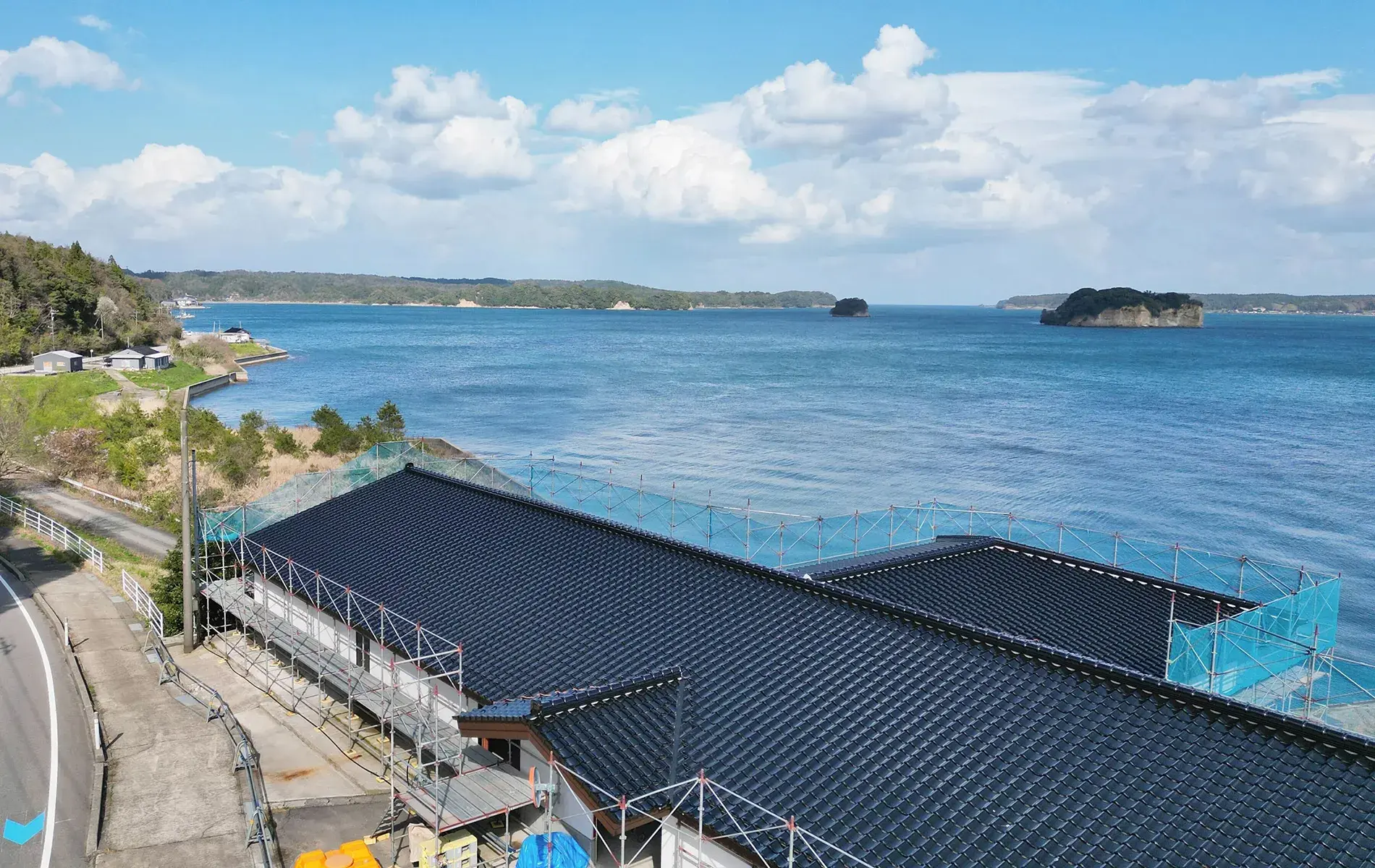 Hitotsu NotojimaSusomachi, Nanao
kobako crab to the end of December and Kano crab, 7 November 2026 to 20 March 2027
The other 4
- Ryokan KurashikiBikan Historical Quarter, Kurashiki
oyster miso hotpot kaiseki, the inn's winter speciality
 TsurukoTakaokamachi, Kanazawa
Kano crab kaiseki, 7 November to 30 December 2026, then a New Year crab kaiseki
Through the year, by the calendar8
 Nara Kasugaokuyama TsukihiteiKasugano, Nara
kaiseki from ingredients the head chef chooses from each day's deliveries